
📑 Table of Contents
- Why India Is the Right Place for a Kidney Transplant
- Why India Is the Right Place for a Kidney Transplant
- A Country Leading the World in Organ Transplants
- Hospitals Spread Across the Whole Country
- Doctors and Specialists Who Know Their Work
- Help for Patients Arriving from Other Countries
- Lower Costs Without Dropping the Standard of Care
- A Medical Tourism System That Actually Works
- Aftercare That Does Not End After Leaving
- Travelling to India Is Not Difficult
- Visa Help for Those Coming from Abroad
- Growing Need for Kidney Transplant Surgery
- Different Types of Kidney Transplants Offered in India
- Deceased Donor Kidney Transplant
- ABO-Incompatible Kidney Transplant
- The Kidney Transplant Process in India
- What a Kidney Transplant Costs in India?
- How India's Transplant System Has Grown?
- Kidney Transplant Success Rates in India
- Risks Involved in a Kidney Transplant
- How India's Transplant Hospitals Keep Patients Safe?
- Recovery Process Post-Kidney Transplant
- Post-Transplant Care in India
- Kidney Transplant or Long-Term Dialysis?
- Laws Regarding Kidney Transplantation in India
- Questions Patients Ask About Kidney Transplant in India
- Final Thoughts

Why India Is the Right Place for a Kidney Transplant
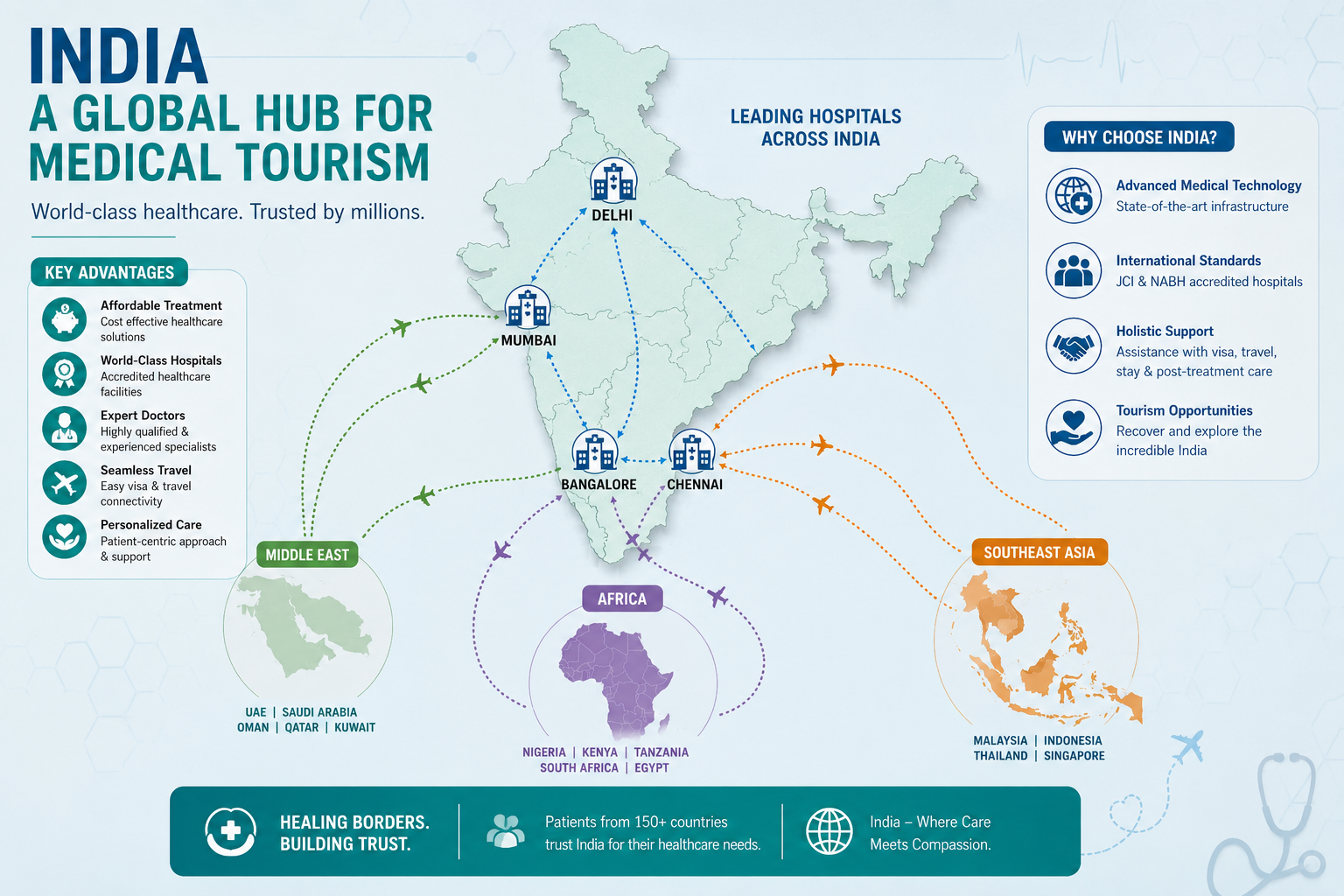
A kidney transplant done well can change a patient's life. Recovery opens doors. Dialysis becomes a thing of the past. Normal daily life feels within reach again. Many patients from other countries travel to India for this surgery, and the reasons are clear skilled doctors, good hospitals, and treatment costs that do not break the bank. India handles thousands of transplants every year. The country stands at the top globally for transplants from living donors. Strong hospital networks, proven transplant programmes, and prices far below those in Western countries make India a destination worth considering.
Why India Is the Right Place for a Kidney Transplant
India draws patients from every corner of the world. They come seeking good care without spending everything they have.
A Country Leading the World in Organ Transplants
India's transplant sector has grown at a pace that few expected even ten years ago. Today, the country holds one of the largest transplant systems anywhere on the planet. This system supports both local patients and those arriving from abroad who need serious kidney care.
Hospitals Spread Across the Whole Country
The National Organ Transplant Programme looks after a wide transplant network. According to the National Organ and Tissue Transplant Organisation, India currently has 1,010 registered hospitals working across 31 states and Union Territories. Patients from abroad get access to well-known centres including Apollo Hospital, BLK-Max Super Speciality Hospital, Fortis Escorts Heart Institute, and Medanta - The Medicity.
Doctors and Specialists Who Know Their Work
Behind every transplant is a team of trained nephrologists, transplant surgeons, anaesthesiologists, and critical care doctors. India's place at the top of living donor transplantation shows exactly how much skill these teams carry.

Help for Patients Arriving from Other Countries
Leading hospitals run departments built just for international visitors. These departments help with treatment planning, shorter waiting times, travel arrangements, places to stay, and follow-up care after the patient goes home.
Lower Costs Without Dropping the Standard of Care
The disparity in pricing when compared with the West cannot be overlooked. India provides a combination of affordability, expertise in transplants, and hospital facilities which makes it an ideal destination for kidney transplant surgery.
A Medical Tourism System That Actually Works
India serves hundreds of thousands of international patients every single year. Big medical cities offer services that combine treatment with travel help, making the whole journey smoother for patients coming from far away.
Aftercare That Does Not End After Leaving
Long-term results following kidney transplantation require regular checks, maintenance, and cooperation of the patient and his or her healthcare providers. Using telecommunication methods and working together with local physicians, patients can remain in touch with their transplant team regarding medications, blood test results, and overall well-being.
Travelling to India Is Not Difficult
The positioning of India in relation to the rest of the world enables easy accessibility from the Middle East, Africa, Central Asia, and Southeast Asia. There are airports with great transport facilities and advanced medical centres to make your visit hassle-free.
Visa Help for Those Coming from Abroad
Healthcare providers like Racure Healthcare offer visa support so international patients can handle travel documents without confusion. This help takes pressure off patients before they even arrive for treatment.
Growing Need for Kidney Transplant Surgery
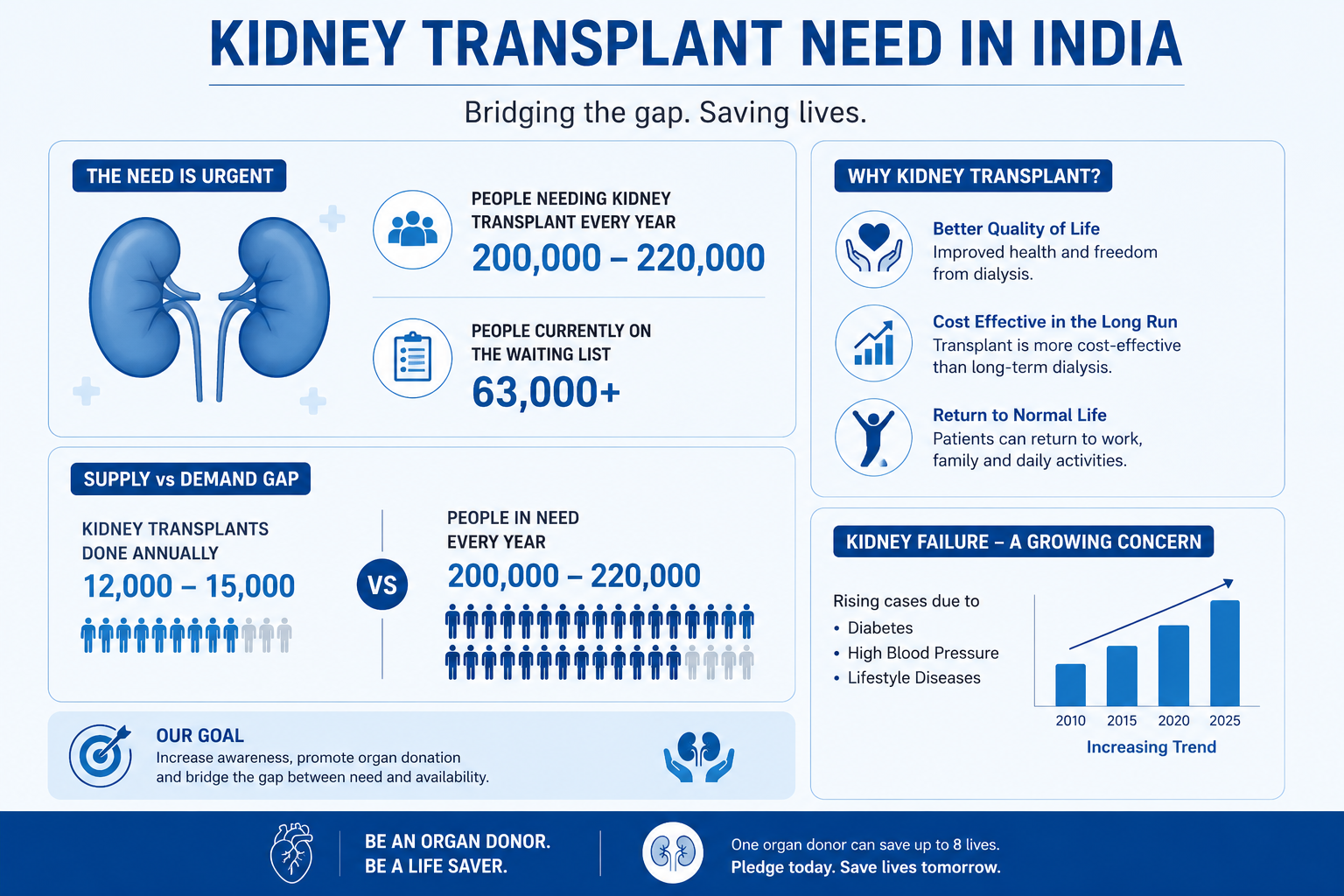
It has been estimated that between 151 and 232 people per million have End-Stage Kidney Disease and need a kidney transplantation. It is expected that each year around 200,000 to 220,000 people need a kidney transplant surgery. The current level of organ donors cannot cope with this growing demand. As of the end of 2025, more than 63,000 people have been on the active waiting list for a kidney transplant.

Different Types of Kidney Transplants Offered in India
Living Donor Kidney Transplant
This type of transplantation procedure uses a kidney from a healthy person who wants to donate his/her kidney. Both the donor and the patient go through detailed tests to check blood group match, tissue compatibility, and general health before any surgery takes place.
Common living donors include:
1. Parents
2. Siblings
3. Adult children
4. Spouses
Other legally approved relatives
Living donor transplants remain the most common form in India. Out of all kidney transplants in 2023, 11,791 came from living donors - about 86.4% of the total number performed across the country.
Deceased Donor Kidney Transplant
The transplantation here involves the use of a kidney from a brain-dead individual whose family has given consent. Only 1,851 of the total 13,545 kidney transplants in 2023 involved deceased donor organs, or around 13.6% of all such transplants performed in the said year.
ABO-Incompatible Kidney Transplant
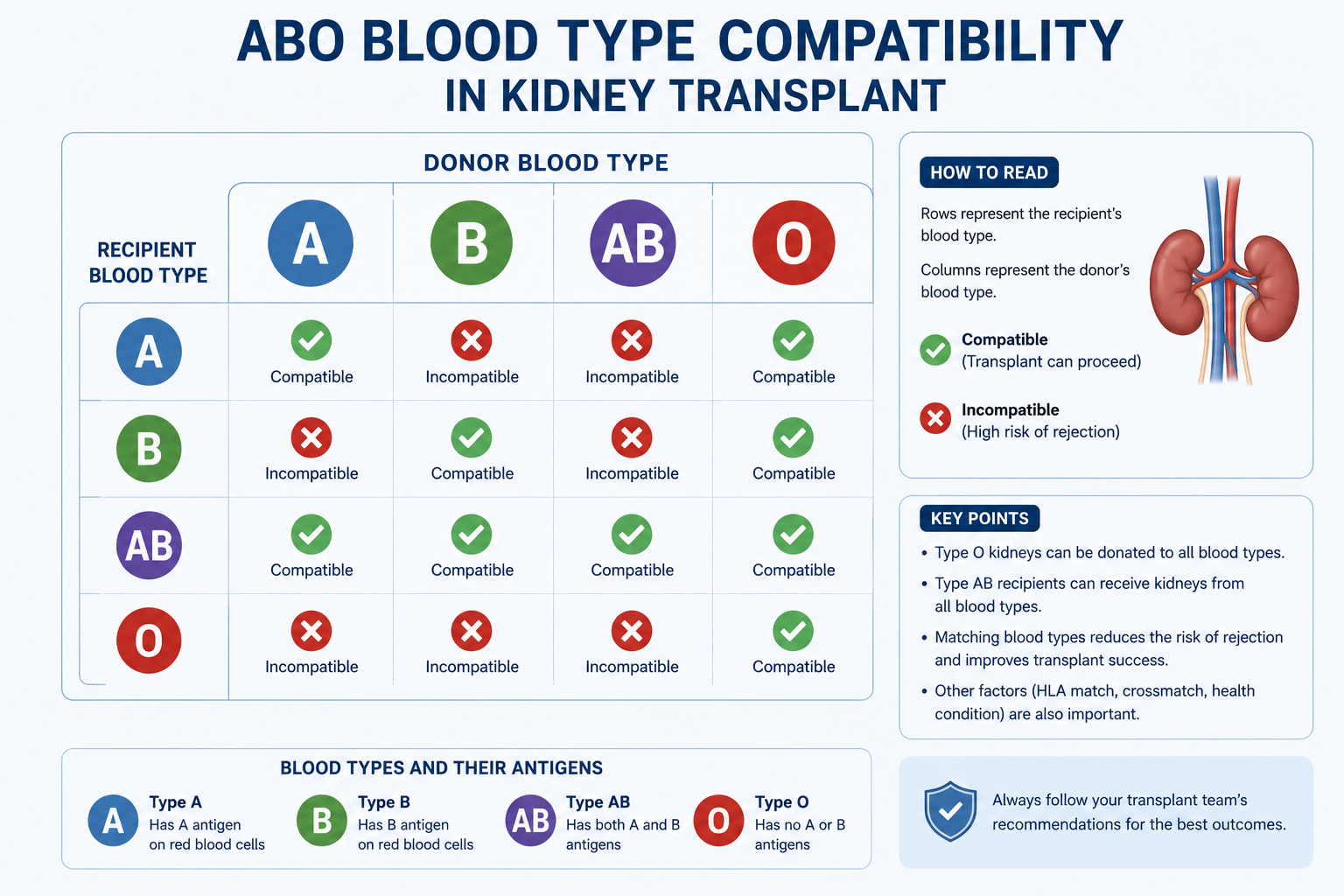
An ABO-incompatible kidney transplant enables the transplant of the kidney despite the inconsistency of the blood type of the donor. This is enabled by the use of immunological preparation before the transplant surgery.
Some techniques used at leading transplant centres include:
- Plasmapheresis for removal of harmful antibodies
- Immunosuppressive therapy
- Immunological surveillance before the transplant
Paired Kidney Exchange - The Swap Transplant Option
Two or more incompatible donor-recipient pairs are matched using computers and each of the donors then donates a kidney to another compatible recipient. From 2015 to 2023, the Indian Society of Organ Transplantation reports that over 500 transplant surgeries have been successfully carried out this way.
The Kidney Transplant Process in India
While each situation is unique, generally a kidney transplant in India follows this sequence:
- Patient evaluation
- Donor evaluation
- Legal authorisation
- Kidney transplant surgery
- Recovery and hospital discharge
Standard Kidney Transplant Timeline
|
Stage |
Typical Duration |
|
Evaluation |
1-2 weeks |
|
Donor Testing |
1-3 weeks |
|
Approval Process |
Varies |
|
Surgery |
3-5 hours |
|
Hospital Stay |
7-14 days |
What a Kidney Transplant Costs in India?
Cost is among the topmost factors to be considered by international patients. Countries such as the US, UK, Canada, and Australia incur very expensive costs for treatments. Many foreign patients are drawn to India because the cost is considerably lower compared to Western nations.
|
Type of Kidney Transplant |
India Cost Range |
USA/UK Cost Range |
|
Living Donor Kidney Transplant |
Rs 8-15 lakh ($9,500-$18,000) |
Rs 2.5-5 crore ($300,000-$600,000) |
|
Deceased Donor Kidney Transplant |
Rs 10-18 lakh ($12,000-$22,000) |
Rs 3-6 crore ($360,000-$720,000) |
|
ABO-Incompatible Kidney Transplant |
Rs 12-22 lakh ($14,000-$26,000) |
Rs 3.5-7 crore ($420,000-$840,000) |
|
Paired Kidney Exchange |
Rs 9-17 lakh ($11,000-$20,000) |
Rs 2.8-5.5 crore ($335,000-$660,000) |
How India's Transplant System Has Grown?
India's transplant system has built itself into a wide network of centres focused on transplant care. The National Organ and Tissue Transplant Organisation reports that hundreds of transplant facilities now operate across multiple states and regions. Out of approximately 600 kidney transplant facilities nationwide, around 75 operate within the public healthcare sector.
Kidney Transplant Success Rates in India
Success of Surgery
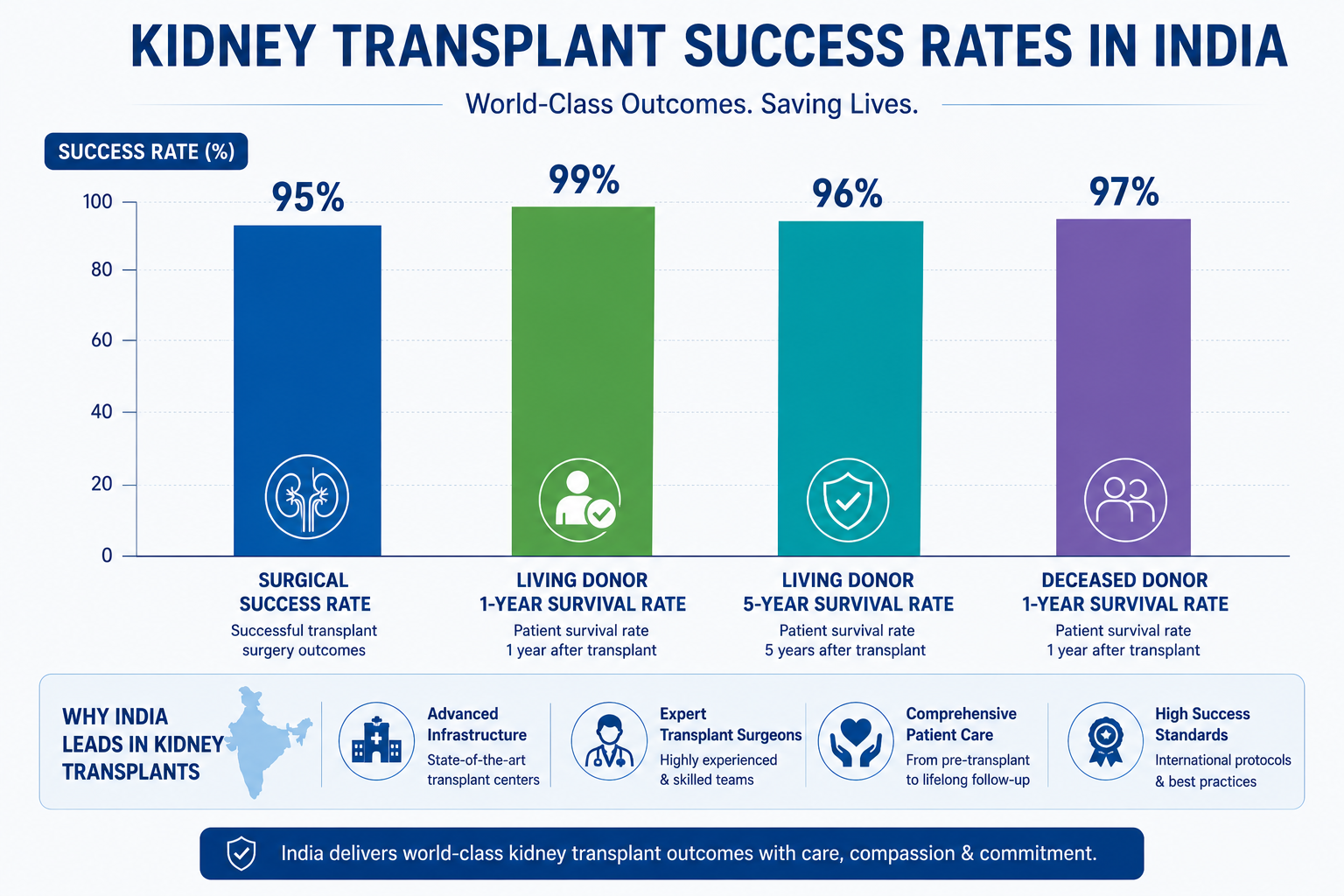
The success rate in terms of surgery being performed and the functioning of the transplanted kidney in patients in India is around 95%.
Patient Long-Term Outcomes
|
Outcome Measure |
Typical Range |
|
Immediate Surgical Success |
Approximately 95% |
|
Living Donor Survival (Year 1) |
Approximately 99% |
|
Living Donor Survival (Year 5) |
Approximately 96% |
|
Deceased Donor Survival (Year 1) |
Approximately 97% |
|
Deceased Donor Survival (Year 5) |
Approximately 90% |
Risks Involved in a Kidney Transplant
The surgery involved in kidney transplant is a very good way of treating end-stage kidney disease. However, there are certain associated risks, knowledge of which would help make sound decisions.
Complications include:
- Organ rejection
- Infection
- Bleeding
- Blood clots
- Medication side effects
How India's Transplant Hospitals Keep Patients Safe?
One such technique is Robotically-Assisted Kidney Transplantation (RAKT). The hospitals in Delhi, Mumbai, and Bangalore have started performing kidney transplants using robotic surgeries. Benefits compared to conventional procedures include:
- Smaller keyhole incisions
- Reduced blood loss
- Lower post-operative pain
- Reduced infection risk
- Recovery that comes sooner
Recovery Process Post-Kidney Transplant
|
Time After Surgery |
Expected Recovery |
|
1 Month |
Initial healing |
|
3 Months |
Improved energy |
|
6 Months |
Stable recovery |
|
1 Year |
Long-term management |
Everyone recovers differently; however, most individuals are able to resume their normal lifestyle after a few months.
Post-Transplant Care in India
Surgeries alone are not sufficient for a good recovery. Long-term results following kidney transplantation require regular checks, maintenance, and cooperation of the patient and his or her healthcare providers. The best transplant centres in India have developed special care procedures that aim to preserve kidney health and prevent complications.
Kidney Transplant or Long-Term Dialysis?
|
Factor |
Kidney Transplant |
Dialysis |
|
Lifestyle |
Better flexibility |
Regular sessions |
|
Cost Over Time |
Potentially lower |
Ongoing |
|
Quality of Life |
Often improved |
Variable |
|
Survival Outcomes |
Generally better |
Lower |
Laws Regarding Kidney Transplantation in India
Transplantation of Human Organs Act
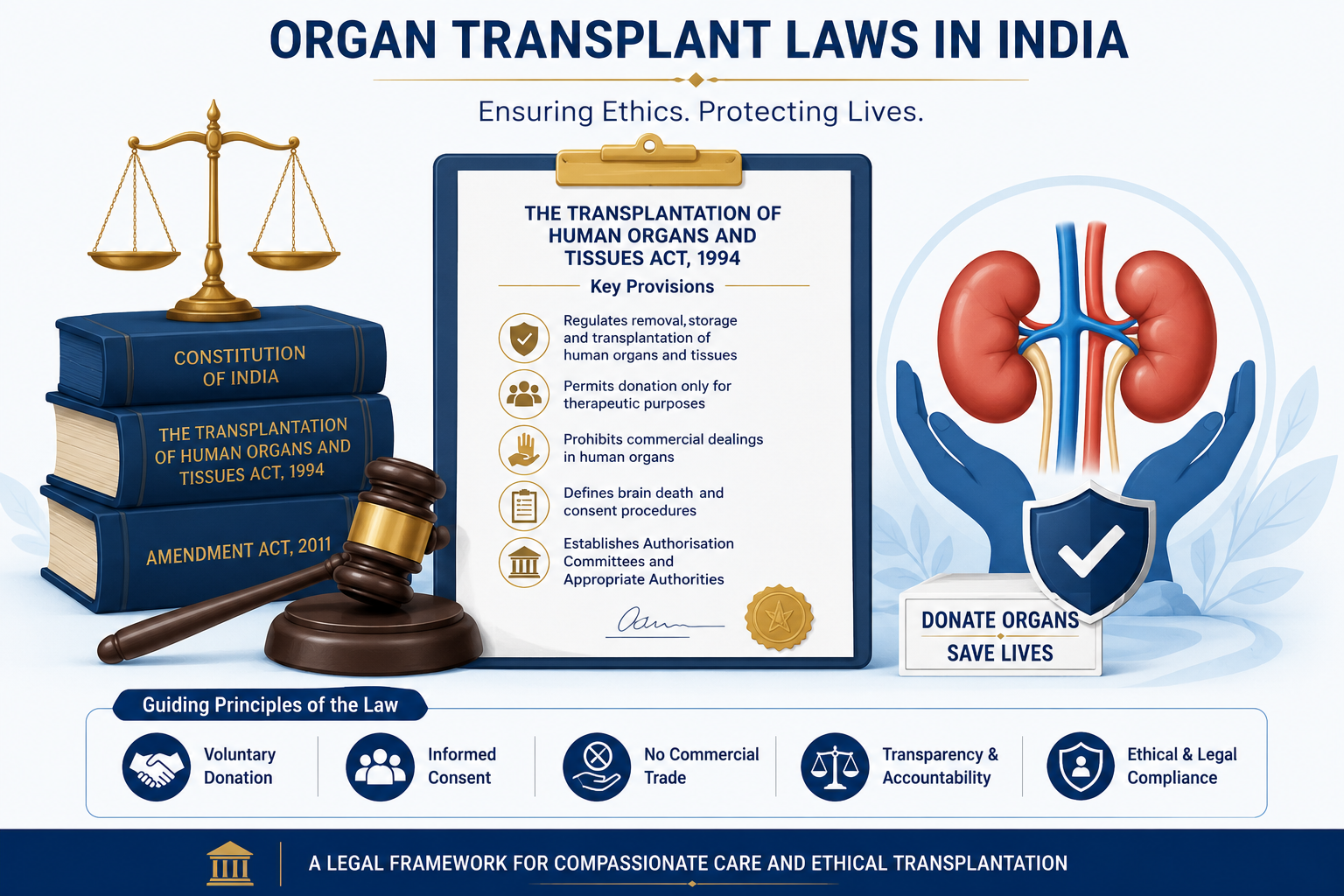
The act which governs all organ transplantations in India is called the Transplantation of Human Organs Act. It was enacted in 1994 and amended in 2008 and 2011. The amendments helped in improving the regulatory system as well as addressing issues faced by transplantology.
Living Donor Rules
Living donor kidney transplantation involves a set of stringent conditions that ensure free and ethical organ exchange according to all established laws and regulations.
Requirements for International Patients
Foreign patients will need to fulfil additional requirements. A patient coming from abroad needs to present a certificate proving their relation to the organ donor and stating eligibility.
Authorisation from the Authorisation Committee
All transplants which involve live donation must be approved by an Authorisation Committee appointed by the Government. The committee reviews all supporting documentation and ensures there are no legal hurdles before giving authorisation.
No Organ Trade for Profit
The law of India clearly states that human organ trade is illegal, and any organ procurement for money will result in prosecution.

Questions Patients Ask About Kidney Transplant in India
Who Can Donate a Kidney in India?
An organ transplant is done according to the Transplantation of Human Organs Act. For a person donating his or her kidney, they should be blood relatives and eligible as per the medical and legal standards of organ donation.
What is the Age Limit for a Kidney Transplant?
There is no age limit that applies to the procedure of a kidney transplant. Factors that affect eligibility include health condition, severity of kidney problem, heart condition, and the capability of undergoing surgery.
Can a Diabetic Patient Undergo a Kidney Transplant?
Yes. Kidney failure is caused by diabetes in many patients making them suitable candidates for a kidney transplant upon medical evaluation.
How Successful Is Kidney Transplantation in India?
The success rate for kidney transplantation in India is 95% according to the results immediately after the surgery. The long-term results are equally good if the patient abides by his or her treatment guidelines.
Can Patients from Other Countries Undergo Kidney Transplantation in India?
Yes. All foreign patients who are eligible for kidney transplantation may have their procedures done in India.

Final Thoughts
Transplantation is not only dependent on the success of the surgical procedure alone but rather on factors such as compatibility between donor and recipient, the recipient's health condition, expertise of the medical personnel, and postoperative care. India has positioned itself as a country that offers some of the most reliable services concerning kidney transplantation because of its experts, sophisticated hospitals, and reliable transplant programs. Transplantation of the kidneys would ensure the recipient's long-term well-being, independence, and improved quality of life which is not possible through dialysis.
🫀 Need Expert Cardiac Care?
Our experienced cardiac surgeons can help you understand your options and plan the best treatment.