📑 Table of Contents
- Medical Tourism in India: The Ultimate Guide for International Patients (2026)
- Why India? The Case for Medical Tourism in India
- Doctors Trained at the World's Best Institutions
- No Waiting Lists
- Advanced Technology
- Oncology — Cancer Treatment
- Orthopedics and Joint Replacement
- Top Medical Tourism Destinations in India
- How to Plan Your Medical Trip to India — Step by Step
- What Patients Often Ask — Real Concerns, Honest Answers
- Indian Healthcare System — Key Facts for International Patients
- Questions to Ask Before Choosing a Hospital
- The Role of a Medical Tourism Facilitator
- Conclusion: India Is Ready for You
Medical Tourism in India: The Ultimate Guide for International Patients (2026)
Every year, over 700,000 international patients travel to India for medical treatment — and the numbers keep rising. They come from the United States, the United Kingdom, Bangladesh, Nigeria, Kenya, the Middle East, and beyond. Some are seeking life-saving surgeries. Others need advanced cancer treatments or fertility care. Many are simply tired of waiting months for procedures they could have done in weeks, at a fraction of the cost, without compromising quality.
India has quietly become one of the world's most trusted destinations for medical tourism. The country is home to internationally accredited hospitals, globally trained specialists, and healthcare infrastructure that rivals — and in many specialties, surpasses — what's available in Western countries.
This guide covers everything an international patient needs to know: why India, which treatments, what it costs, how to plan, what to expect, and how to get started. Whether you are exploring options or ready to book, this is your complete resource.
Why India? The Case for Medical Tourism in India
India's rise as a global medical tourism hub is not accidental. It is the result of decades of investment in medical education, hospital infrastructure, and healthcare technology — combined with natural advantages in cost, language, and hospitality that are difficult to replicate anywhere else.
1.1 Cost Savings That Are Simply Staggering
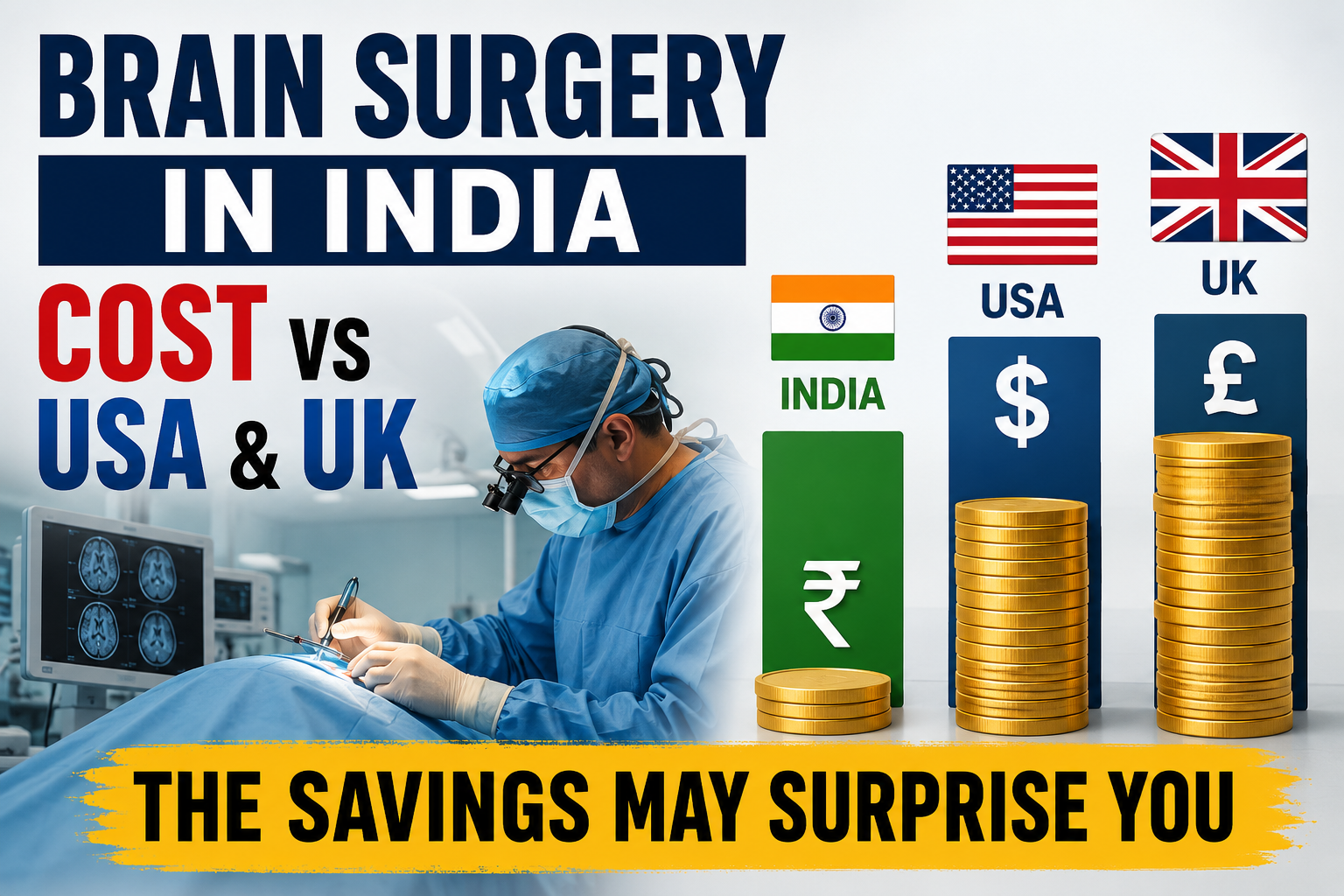
For most international patients, cost is the first reason they consider India. The savings are not marginal — they are transformational. A procedure that costs $30,000 in the United States might cost $4,000–$6,000 in India, at a hospital with the same equipment, same surgical techniques, and often the same brand of implants.
Here is a real-world cost comparison across common procedures:
|
Procedure |
Cost in USA/UK (USD) |
Cost in India (USD) |
|
Heart Bypass (CABG) |
$70,000 – $120,000 |
$5,000 – $8,000 |
|
Hip Replacement |
$40,000 – $65,000 |
$5,500 – $8,500 |
|
Knee Replacement |
$35,000 – $55,000 |
$5,000 – $7,500 |
|
Liver Transplant |
$300,000 – $500,000 |
$25,000 – $40,000 |
|
Kidney Transplant |
$150,000 – $300,000 |
$13,000 – $18,000 |
|
IVF (Per Cycle) |
$12,000 – $25,000 |
$2,500 – $4,500 |
|
Spinal Fusion |
$50,000 – $90,000 |
$5,000 – $9,000 |
|
Cancer Treatment (Chemo) |
$50,000 – $150,000+ |
$6,000 – $20,000 |
|
Cosmetic Surgery (Rhinoplasty) |
$8,000 – $15,000 |
$2,000 – $4,000 |
|
Why Is Healthcare So Affordable in India? The lower cost is not a sign of lower quality. It reflects lower labor costs, lower real estate costs, and a different economic structure. Indian hospitals use the same imported medical equipment, the same FDA-approved drugs, and the same internationally trained surgeons — the overhead is simply lower. |
1.2 World-Class Hospitals and Accreditation
India has more Joint Commission International (JCI)-accredited hospitals than any other Asian country. JCI accreditation is the gold standard for hospital quality internationally — the same benchmark used to evaluate hospitals in the United States, Europe, and Australia.
Leading hospital networks in India with international patient programs include:
- Apollo Hospitals — Pan-India network, pioneering cardiac and cancer care since 1983
- Fortis Healthcare — 36+ hospitals, known for organ transplants and neurosciences
- Medanta – The Medicity — Gurugram-based super-specialty hospital with 1,500+ beds
- Max Healthcare — North India's premier network for oncology and orthopedics
- Manipal Hospitals — South and West India, strong in neurology and urology
- Kokilaben Dhirubhai Ambani Hospital — Mumbai, advanced robotics and oncology
- AIIMS Delhi — Premier government institution, among the best in Asia
Doctors Trained at the World's Best Institutions
India produces over 67,000 doctors every year — one of the largest physician workforces in the world. Many of India's senior specialists have trained or practiced at institutions such as Johns Hopkins, Mayo Clinic, Harvard Medical School, the NHS in the UK, and AIIMS.
Crucially, the majority of India's top surgeons speak fluent English. For international patients, this means you can have a full, nuanced conversation with your surgeon — ask questions, understand your options, and feel genuinely heard — without an interpreter.
No Waiting Lists
In countries like the UK, Canada, and Australia, patients can wait 12–24 months for elective surgeries like knee replacements or hip replacements under public healthcare. In India, you can typically be admitted within a week of your arrival — sometimes sooner. For conditions that are time-sensitive, this speed is not a convenience. It is medically critical.
Advanced Technology
India's leading hospitals are equipped with the latest medical technology: robotic surgery systems (da Vinci Surgical System), Cyber Knife and Proton Therapy for cancer, 3D laparoscopy, PET-CT and 3 Tesla MRI scanners, next-generation genomic testing, and stem cell therapy units. You are not compromising on technology when you choose India — you are often accessing equipment that is not yet available in your home country.
2. Most Popular Medical Treatments in India for International Patients
India excels across virtually every medical specialty. Below are the treatments that draw the highest number of international patients:
2. Cardiac Surgery and Heart Care
India performs more than 200,000 cardiac surgeries annually. The country's cardiac care ecosystem is exceptionally mature, with cardiologists and cardiac surgeons who have treated patients from over 100 countries.
Common cardiac procedures sought by international patients:
- Coronary Artery Bypass Grafting (CABG)
- Valve Replacement (Aortic, Mitral, Tricuspid)
- Angioplasty and Coronary Stenting
- Pacemaker and Defibrillator Implantation
- Pediatric Cardiac Surgery
- Heart Failure Management and LVAD Implantation
- Transcatheter Aortic Valve Replacement (TAVR)
2. Organ Transplants
India is one of the few countries where international patients can legally receive organ transplants, provided they meet regulatory criteria. The country has a strong organ transplant program, with specialized transplant centers performing liver, kidney, heart, and lung transplants with survival rates that match international benchmarks.
|
Transplant Type |
Key Information for International Patients |
|
Kidney Transplant |
Living-related donor (family member) transplants widely available. Cadaveric donor transplants also performed. |
|
Liver Transplant |
Both living-donor and deceased-donor. India ranks among the top globally for liver transplant outcomes. |
|
Heart Transplant |
Performed at specialized centers. Requires cadaveric donor. Patient must be registered with NOTTO. |
|
Bone Marrow Transplant |
Available for leukemia, lymphoma, aplastic anemia. HLA-matched sibling donor preferred. |
|
Corneal Transplant |
Short procedure, high success rate. Often performed within days of arrival. |
Oncology — Cancer Treatment
India offers comprehensive cancer care at a fraction of the cost charged in Western countries. From initial diagnosis through surgery, chemotherapy, radiation, immunotherapy, and palliative care — India's oncology centers provide integrated, multidisciplinary care.
India specializes in treating the following cancers:
- Breast Cancer — Surgery, Hormone Therapy, Targeted Therapy
- Lung Cancer — Minimally invasive surgery, Immunotherapy
- Cervical & Ovarian Cancer — Robotic surgery, Brachytherapy
- Prostate Cancer — Robotic prostatectomy, HIFU
- Blood Cancers — Leukemia, Lymphoma, Myeloma
- Head & Neck Cancers — Advanced radiation including IMRT
- Colorectal Cancer — Laparoscopic and robotic surgery
- Brain Tumors — Gamma Knife, CyberKnife radiosurgery
Orthopedics and Joint Replacement
Joint replacement surgery in India is one of the most sought-after procedures among international patients — particularly from Western countries where the cost and wait times are prohibitive. India's orthopedic surgeons are trained in the latest minimally invasive techniques, and patients typically begin walking within 24 hours of surgery.
- Total Knee Replacement (TKR) and Bilateral Knee Replacement
- Total Hip Replacement
- Shoulder Replacement and Rotator Cuff Repair
- Spinal Surgery — Disc Replacement, Spinal Fusion, Scoliosis Correction
- Sports Medicine — ACL Reconstruction, Meniscus Repair
Top Medical Tourism Destinations in India
While excellent hospitals exist across India, certain cities have emerged as primary medical tourism hubs due to their concentration of specialty hospitals, international patient services, and infrastructure:
|
City |
Medical Strengths and Notable Hospitals |
|
Delhi / NCR (Gurugram, Noida) |
Cardiac surgery, organ transplants, neurosurgery, oncology. Home to AIIMS, Medanta, Fortis, Max, Apollo. |
|
Chennai |
Historically India's #1 medical tourism city. Excellent in cardiac surgery, renal transplants, and orthopedics. Apollo Chennai is a global benchmark. |
|
Mumbai |
Advanced oncology, liver transplants, cosmetic surgery. Tata Memorial Cancer Centre, Kokilaben, Lilavati. |
|
Hyderabad |
Ophthalmology, fertility, bariatrics, orthopedics. L.V. Prasad Eye Institute is world-renowned. |
|
Bengaluru |
IT-savvy healthcare, oncology, neurosurgery, pediatrics. Manipal and Narayana Health flagship centers. |
|
Kolkata |
Eastern India hub. Strong in cardiac care and oncology. Woodlands and Apollo Gleneagles. |
|
Pune |
Emerging hub. Organ transplants, orthopedics, IVF. Sahyadri and Ruby Hall Clinic. |
How to Plan Your Medical Trip to India — Step by Step
Planning a medical trip abroad requires careful preparation. Here is a practical, step-by-step guide to help international patients navigate the process smoothly:
Step 1: Get a Diagnosis and Medical Summary
Before reaching out to any hospital in India, compile your current medical records. This should include your diagnosis (if already known), recent blood reports, imaging scans (MRI, CT, X-ray), previous surgical records, current medications list, and any specialist reports. The more complete this package is, the more accurate the treatment plan and cost estimate you will receive from India.
Step 2: Contact the Hospital's International Patient Department
Every major hospital in India has a dedicated International Patient Services (IPS) department. Send your medical reports to this department. Within 24–72 hours, you will typically receive a treatment plan from the relevant specialist along with a detailed cost estimate covering consultation, diagnostic tests, procedure, anesthesia, hospital stay, and follow-up care.
Step 3: Get a Second Opinion (Optional but Recommended)
Once you have received a treatment plan, consider getting a second opinion from another hospital in India or a specialist in your home country. This is particularly advisable for complex procedures like organ transplants, cancer surgery, or neurosurgery. Most reputable hospitals in India will encourage you to do this rather than pressure you to commit immediately.
Step 4: Apply for a Medical Visa
India has a specific Medical Visa (MED Visa) for international patients traveling for treatment. This visa is different from a tourist visa and is required if you plan to receive medical treatment in India.
|
Medical Visa Key Facts Medical Visa (MED) is valid for up to 1 year or the duration of the treatment, with multiple entries allowed. You can bring up to 2 attendants on Medical Attendant Visa (MED-X). Apply at your nearest Indian Embassy or High Commission. You will need a letter from the treating hospital confirming admission. Processing time: 3–10 business days. Visa-on-Arrival is NOT available for medical purposes. |
Step 5: Arrange Travel and Accommodation
Book your flight after confirming your admission date with the hospital. Most major Indian hospitals have empaneled guest houses, service apartments, and hotels nearby for patients and attendants. These are usually significantly cheaper than booking independently. Many hospitals also offer airport pickup services for international patients.
Step 6: Arrive, Consult, and Proceed with Treatment
On arrival, the hospital's international patient team will guide you through registration, initial consultations, pre-operative tests, and admission. Your case will be managed by a dedicated patient coordinator who acts as your single point of contact throughout your stay.
Step 7: Recovery and Follow-Up
After your procedure, your surgeon will recommend a minimum recovery period before you are cleared to fly home. This varies from a few days (for minor procedures) to several weeks (for major surgeries like organ transplants or complex spine surgery). Before you leave, the hospital will provide you with a detailed discharge summary, prescription, follow-up plan, and digital copies of all medical records for your home doctor.
What Patients Often Ask — Real Concerns, Honest Answers
"Is the quality of care really comparable to Western hospitals?"
Yes — at accredited hospitals. India's top hospitals (JCI and NABH accredited) follow the same clinical protocols, use the same equipment, and achieve the same or better outcomes as top hospitals in the US, UK, or Europe. The key is choosing the right hospital. India also has a tier of smaller, less-regulated facilities — avoid these for serious procedures.
"What happens if something goes wrong?"
Top hospitals in India have fully equipped ICUs, emergency response teams, and experienced intensivists. Complications are managed on-site. Your treating surgeon remains responsible for your care. Before you leave India, ensure you have all medical records and a follow-up plan for your doctor at home. For complex cases, some patients arrange post-discharge medical supervision in India before flying.
"How do I handle payments? Do hospitals accept insurance?"
Most international patients pay out of pocket, which is still far cheaper than the same procedure in their home country. Some hospitals accept international insurance, but this varies by insurer and hospital. It is worth contacting your insurance provider before travel. Hospitals typically require a deposit at admission, with the balance paid at discharge. Major credit cards are accepted at all leading hospitals.
"Is it safe to travel to India for medical reasons?"
India is generally safe for international medical travelers, particularly in the major cities where the top hospitals are located. The hospitals themselves maintain secure, well-managed campuses with dedicated international patient areas. Basic travel precautions apply: stay hydrated, use bottled water, carry your prescription medications from home, and follow your doctor's dietary advice during recovery.
"What about food and language during my stay?"
English is widely spoken in Indian hospitals — by doctors, nursing staff, coordinators, and most administrative personnel. You will not face a communication barrier in any major hospital. Regarding food, hospital kitchens at international patient centers can accommodate most dietary requirements — including halal, vegetarian, vegan, and specific cultural preferences. Many hospitals also have international food options available.
6. India vs. Other Medical Tourism Destinations
India competes with Thailand, Turkey, Malaysia, Mexico, and Singapore for international patients. Here is an honest comparison:
|
Factor |
India |
Thailand |
Turkey |
Malaysia |
Singapore |
|
Cost |
★★★★★ |
★★★★ |
★★★★ |
★★★★ |
★★★ |
|
Specialist Depth |
★★★★★ |
★★★★ |
★★★★ |
★★★ |
★★★★★ |
|
Hospital Quality |
★★★★★ |
★★★★ |
★★★★ |
★★★★ |
★★★★★ |
|
English Proficiency |
★★★★★ |
★★★ |
★★★ |
★★★★ |
★★★★★ |
|
Treatment Range |
★★★★★ |
★★★★ |
★★★★ |
★★★ |
★★★★ |
|
Recovery Tourism |
★★★★ |
★★★★★ |
★★★★ |
★★★★ |
★★★ |
India's unmatched advantage is the sheer depth of specialist expertise — particularly for complex procedures like organ transplants, rare cancer surgeries, and complex orthopedic reconstructions — combined with the lowest overall cost.
Indian Healthcare System — Key Facts for International Patients
|
Fact |
Details |
|
Accreditation |
India has 30+ JCI-accredited hospitals and 700+ NABH-accredited facilities |
|
Medical Education |
India has 706 medical colleges producing 90,000+ doctors annually |
|
Industry Size |
Medical tourism industry valued at USD 9 billion in 2024; projected USD 14 billion by 2027 |
|
Annual Visitors |
700,000+ international patients annually from 150+ countries |
|
Top Source Countries |
Bangladesh, USA, UK, UAE, Kenya, Nigeria, Nepal, Oman, Afghanistan, Iraq |
|
Government Support |
Indian government promotes medical tourism through 'Heal in India' initiative |
|
Regulation |
Clinical Establishments Act governs hospital standards; NOTTO regulates organ transplants |
|
Languages |
English is the primary clinical language at all major hospitals |
Questions to Ask Before Choosing a Hospital
When evaluating hospitals, ask these questions to your international patient coordinator:
- Is the hospital JCI or NABH accredited? What was the last accreditation date?
- How many procedures of this type has your surgeon performed in the last year?
- What is your hospital's success rate and complication rate for this procedure?
- What does the cost estimate include — and what might be charged separately?
- What is the average length of stay for this procedure?
- Is there a dedicated international patient coordinator assigned to my case?
- Can I speak with the surgeon before I travel? Can consultations happen online?
- What post-operative follow-up support do you provide after I return home?
- Is there an emergency contact available 24/7 during my stay?
- Do you assist with medical visa letters and travel coordination?
9. Post-Treatment Care — Returning Home Safely
A successful medical trip does not end at the airport. Post-operative care once you return home is as important as the surgery itself. Here is what to plan for:
Before You Fly Home
- Get medical clearance from your surgeon — not all procedures allow immediate flying
- Obtain a full set of digital medical records: surgical notes, pathology reports, imaging
- Get prescriptions for all post-operative medications in generic names (easier to fill abroad)
- Understand all wound care, activity restrictions, and warning signs of complications
- Arrange a follow-up appointment with your GP or specialist at home before you leave India
During the Flight
- For procedures involving joints or circulation, wear compression stockings
- Stay hydrated and walk the aisle periodically on long flights
- Carry all medications in your cabin luggage with a copy of your prescription
- Inform the airline of your medical condition for additional assistance if needed
After Returning Home
- Share your complete medical records with your home doctor immediately
- Attend all scheduled follow-up appointments
- Do not discontinue medications without medical advice
- Report any symptoms — fever, swelling, wound discharge, breathlessness — to your doctor immediately
- Indian hospitals will typically remain available for remote follow-up and medical queries
The Role of a Medical Tourism Facilitator
For many international patients — especially those traveling alone, those unfamiliar with India, or those dealing with complex cases — a medical tourism facilitator can make the experience significantly smoother.
A good facilitator will help you with:
- Selecting the right hospital and specialist for your specific condition
- Getting medical opinion from multiple hospitals and helping you compare
- Arranging the medical visa letter from the hospital
- Booking flights and accommodation near the hospital
- Airport transfers and in-city transport
- Translation and interpretation support
- Billing assistance and payment coordination
- Post-treatment follow-up coordination with your home doctor
|
Important Racure Healthcare provides end-to-end support for international patients — from initial medical assessment through treatment and safe return home. Our team coordinates with India's top hospitals to ensure you receive the best care, at the right facility, at transparent and fair pricing. Reach out to begin your consultation. |
Conclusion: India Is Ready for You
Medical tourism in India is not a compromise — it is a choice made by informed, discerning patients who refuse to pay inflated prices for care they can access at equal quality elsewhere. The patients who travel to India return home not just healthier, but genuinely impressed by the warmth of the care they received, the professionalism of the doctors, and the remarkable value for money.
Whether you are considering a life-saving organ transplant, a long-overdue joint replacement, fertility treatment, or cancer care — India has the specialists, the hospitals, the technology, and the experience to help you. The question is not whether India can help you. The question is: are you ready to take the step?
|
Start Your Journey Today Send us your medical reports and we will connect you with the right specialist within 48 hours. Our international patient team speaks your language — figuratively and often literally. Contact Racure Healthcare to begin your free medical assessment. |
🫀 Need Expert Cardiac Care?
Our experienced cardiac surgeons can help you understand your options and plan the best treatment.