📑 Table of Contents
- MEDICAL TREATMENT IN INDIA FOR INTERNATIONAL PATIENTS
- India's Medical Tourism Boom: By the Numbers
- Why Do International Patients Choose India?
- Types of Medical Treatment Available in India
- International Patient Logistics: Practical Information
- The Medical Visa (MED Visa): Your Gateway to Healthcare in India
- Finding the Right Hospital: A Step-by-Step Guide
- The Complete Patient Journey: Timeline and Process
- Cost Transparency: Understanding Your Medical Bill
- Insurance and Medical Tourism: Will Your Insurance Cover It?
- Safety, Quality Assurance, and Managing Complications
- Special Considerations for Different Patient Groups
- Common Questions and Concerns
- How to Get Started: Your Action Plan
- Why Millions Choose India: The Bottom Line
MEDICAL TREATMENT IN INDIA FOR INTERNATIONAL PATIENTS
Healthcare is one of those things you can't put off. But when your healthcare choices come down to affordability versus access, or when you're facing long waiting lists in your home country, you start looking at alternatives. And more and more people around the world are discovering that those alternatives lead to India.
Maybe you've heard stories — a friend's cousin who had surgery in Delhi for a tenth of what it would have cost in Los Angeles. Or you've seen articles about India's medical tourism boom. But you probably have dozens of questions: Is it really safe? How does the whole process work? What if I run into complications? Will my insurance cover it? How do I find the right hospital and doctor?
This guide answers all of those questions — and many more. By the end, you'll have a clear, practical understanding of what it means to seek medical treatment in India as an international patient, from the moment you decide to explore it to your follow-up care after you return home.
India's Medical Tourism Boom: By the Numbers
Medical tourism isn't a small niche in India. It's a significant, fast-growing industry.
- Over 500,000 international patients travel to India for medical treatment annually
- Medical tourism generates approximately $9+ billion in revenue for the Indian healthcare system
- India ranks among the top three global destinations for medical tourism, alongside Mexico and Thailand
- International patients represent roughly 5-10% of the patient volume at tier-1 hospitals in major cities
- Average length of stay: 2-4 weeks for major procedures; 1-2 weeks for outpatient treatments
What's driving this boom? The answer is simple: you get world-class medical care, trained by international standards, at a price that makes healthcare accessible rather than financially devastating.
Why Do International Patients Choose India?
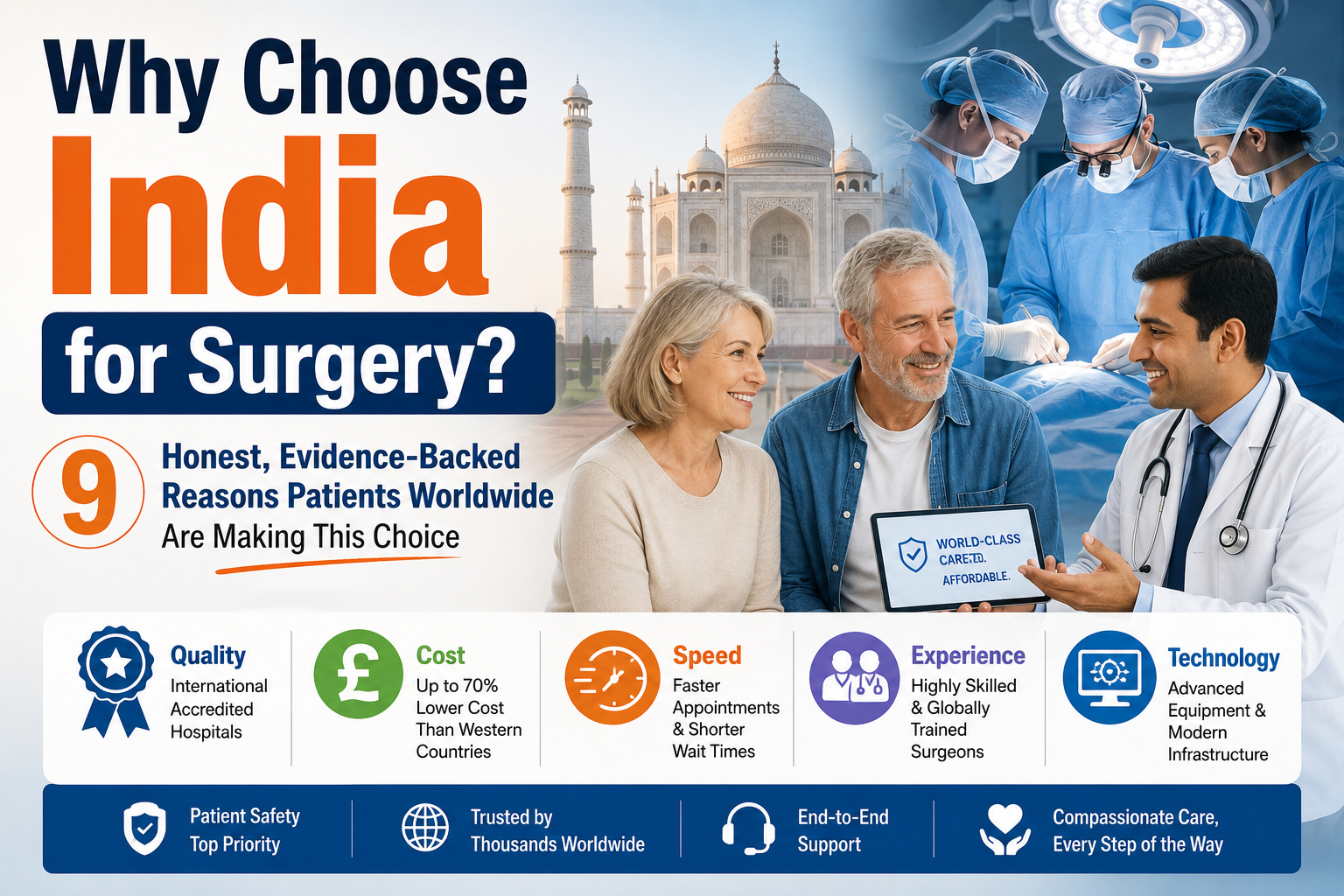
1. Unbeatable Cost Savings
This is the primary reason, and for good reason. A heart bypass surgery that costs $130,000 in the United States might cost $6,000 in India — at a hospital using the same surgical techniques, same implants, and surgeons trained at the same institutions. After accounting for flights and accommodation, you're still saving $100,000+.
These savings aren't unique to expensive procedures. Even routine treatments — from dental work to diagnostic imaging — cost a fraction of what you'd pay in Western countries.
2. World-Class Medical Standards
The best hospitals in India follow the same international protocols, use the same equipment, and employ doctors with the same credentials as hospitals in the US or UK. Many Indian doctors trained at Harvard, Johns Hopkins, Mayo Clinic, or other world-renowned institutions.
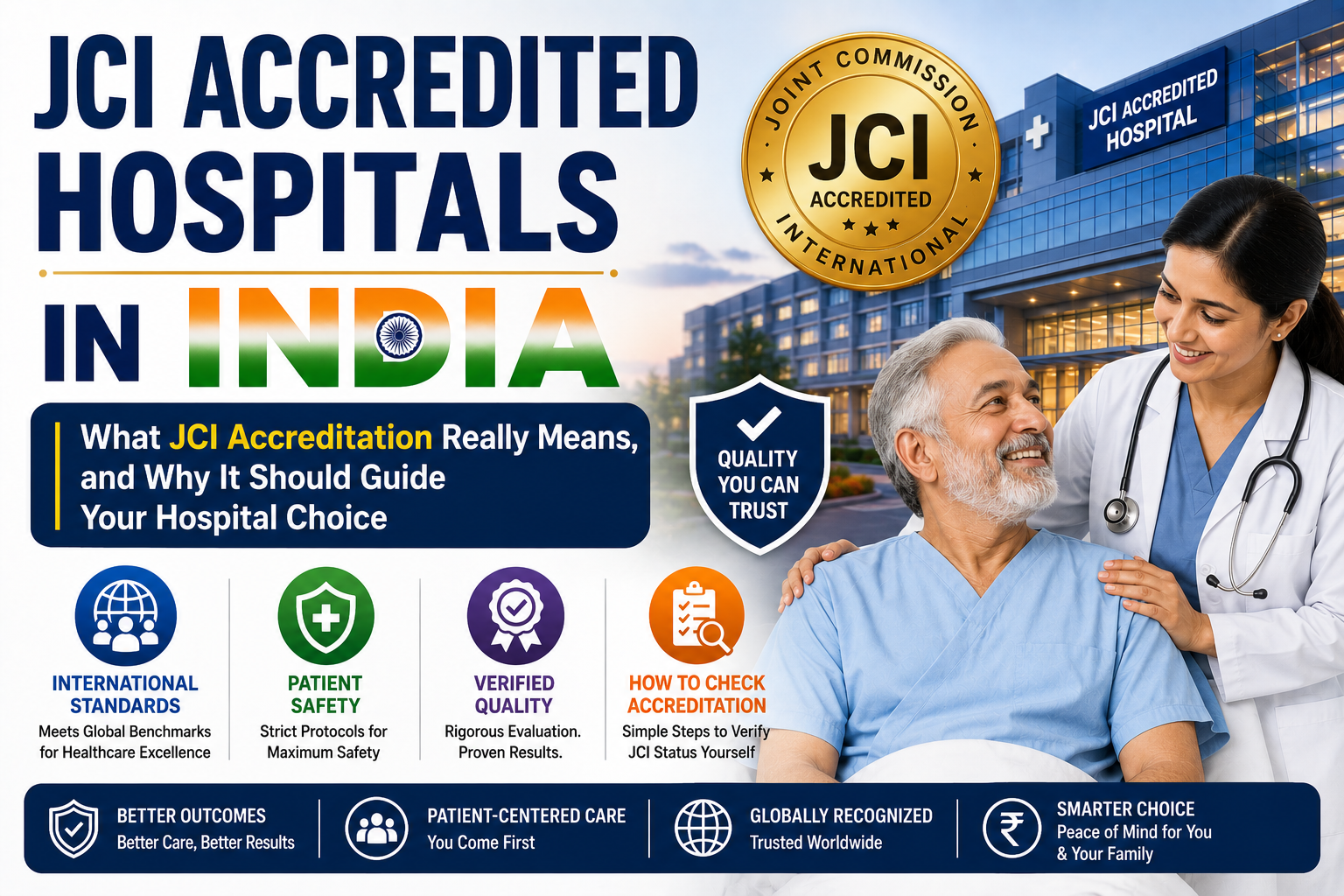
JCI accreditation — the same standard used in America — is held by over 40 hospitals in India. These hospitals are audited to meet identical quality standards as accredited American hospitals.
3. No Waiting Lists
In the UK, Canada, and Australia, patients with non-emergency conditions can wait months for procedures through the public system. In India, you can often be scheduled within days or weeks. For someone in pain or dealing with a progressive condition, this difference is enormous.
4. Experienced, Specialized Surgeons
Top surgeons in India often perform the same procedure hundreds of times per year — far more than the average Western surgeon. This volume translates directly into surgical expertise and better outcomes. Many leading surgeons in India have published extensively in international medical journals and are recognized globally in their field.
5. Comprehensive Medical Tourism Infrastructure
It's not just about the surgery. International hospitals in India have dedicated International Patient Departments (IPDs) with:
- English-speaking staff and coordination teams
- Visa assistance and documentation support
- Airport pickups and hospitality arrangements
- Accommodation options for accompanying family members
- Cultural liaison support
- Comprehensive travel and logistics guidance
6. Access to Procedures and Expertise Not Available at Home
Some of the world's leading experts in particular specialties practice in India. If you need a specific procedure or want to be treated by a particular surgeon whose expertise is unmatched, India may be your best option — regardless of cost.
Types of Medical Treatment Available in India
India's healthcare system covers literally everything — from routine primary care to some of the most complex, cutting-edge procedures in the world. Here's a breakdown:
|
Category of Treatment |
What's Available |
|
Emergency & Acute Care |
Trauma, stroke, heart attack, accidents — world-class emergency departments |
|
Chronic Disease Management |
Diabetes, hypertension, heart disease — comprehensive outpatient programs |
|
Major Surgery |
Cardiac bypass, transplants, cancer surgery, spinal fusion, orthopedic procedures |
|
Minimally Invasive Procedures |
Laparoscopic surgery, endoscopy, robotic-assisted surgery, interventional radiology |
|
Cancer Diagnosis & Treatment |
Screening, chemotherapy, radiation therapy, immunotherapy, bone marrow transplants |
|
Fertility & Reproductive Health |
IVF, egg/sperm donation, surrogacy coordination, fertility assessments |
|
Orthopedic Procedures |
Joint replacement, arthroscopy, sports medicine, trauma surgery, rehabilitation |
|
Organ Transplantation |
Kidney, liver, heart, lung, bone marrow — both cadaveric and living donor |
|
Wellness & Prevention |
Executive health check-ups, preventive screenings, health optimization programs |
|
Dental & Cosmetic |
Implants, orthodontics, smile design, aesthetic procedures, hair restoration |
International Patient Logistics: Practical Information
Beyond the medical aspects, here's what the practical experience is like for international patients coming to India:
|
Aspect |
Details |
|
Total Cost Savings |
60-90% compared to USA, 40-70% vs UK/Australia |
|
Average Stay Duration |
2-4 weeks for major procedures, 1-2 weeks for routine treatments |
|
Visa Processing |
Medical Visa (MED) — dedicated category, usually approved within 7-10 days |
|
Language Support |
English available at all tier-1 hospitals; translators on staff |
|
Accommodation for Family |
Hospital guesthouses, serviced apartments, hotels within walking distance |
|
Direct Flight Connections |
Delhi, Mumbai, Bangalore, Hyderabad connected to 50+ international cities |
|
Pre-Travel Consultation |
Virtual meetings with surgeon and specialist team before arrival |
|
Medical Record Transfer |
Secure digital portals for imaging, reports, and test results |
|
Post-Treatment Telemedicine |
Follow-up consultations available via video call after returning home |
|
Insurance Reimbursement |
Many insurance companies reimburse medical tourism expenses |
The Medical Visa (MED Visa): Your Gateway to Healthcare in India
India's government recognizes the importance of medical tourism and has created a dedicated visa category for patients traveling for treatment.
What is the Medical Visa?
The MED Visa (Medical Visa) is a special category for foreign nationals traveling to India for medical treatment. It's specifically designed to streamline the visa process for patients and their families.
Key Features:
- Valid for up to 1 year from the date of issue
- Allows multiple entries to India during the validity period
- Faster processing than standard visas — typically approved within 7-10 days
- Allows for an accompanying caregiver or family member on a related visa
- Can be extended if your treatment requires more time than initially planned
How to Obtain a Medical Visa:
The process is straightforward:
- Choose your hospital and initiate a medical consultation
- The hospital's International Patient Department (IPD) provides an invitation letter or authorization letter for your visa application
- Apply through the Indian embassy or consulate in your country, or online through India's e-Visa portal if eligible
- Submit the invitation letter along with your visa application
- Most applications are approved within 7-10 working days
Bringing Family Members
Under the MED Visa scheme, you can bring one accompanying family member on a MEDX Visa (for patient attendants). This person can stay with you throughout your treatment and recovery, providing crucial emotional and practical support.
Finding the Right Hospital: A Step-by-Step Guide
With hundreds of hospitals in India claiming international expertise, how do you find the right one? Here's a practical approach:
Step 1: Verify Accreditation
This is non-negotiable. Check for:
- JCI (Joint Commission International) accreditation — verify directly on JCI's website
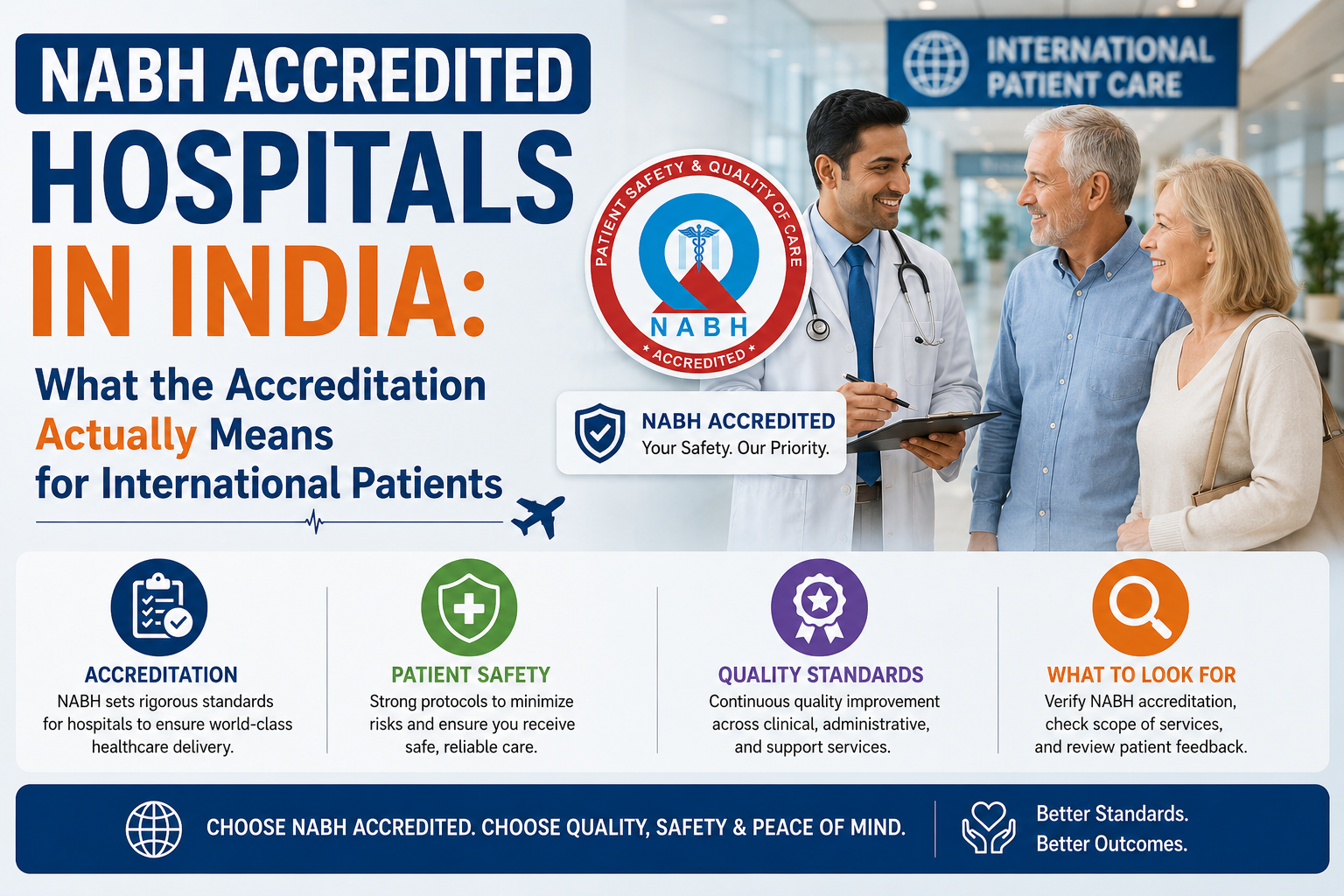
- NABH (National Accreditation Board for Hospitals) accreditation
- ISO certifications (ISO 9001, ISO 45001, etc.)
Accreditation means the hospital has been independently audited and meets rigorous international standards.
Step 2: Assess Specialization
If you need cardiac surgery, you want a hospital known for cardiac excellence — not a generalist facility. Look for:
- Hospitals with dedicated departments and published success rates for your specific procedure
- Medical literature or research publications from the hospital's doctors
- Patient testimonials specifically for your procedure type
Step 3: Research the Surgeons
The procedure matters, but the surgeon matters more. Look into:
- Medical qualifications and training (especially any Western training)
- Published research or case studies
- Years of experience and volume of procedures performed
- Patient reviews and testimonials
Step 4: Direct Contact with IPD
Contact the hospital's International Patient Department directly. They should:
- Respond promptly to your inquiries (within 24-48 hours)
- Provide clear, detailed information about your condition and treatment options
- Answer all your questions about costs, timelines, and logistics
- Help coordinate with surgeons and specialists
Step 5: Get a Second Opinion
Even after receiving a treatment plan from one hospital, get an independent second opinion — either from your home country doctor or another hospital in India. This is standard practice and hospitals expect it.
The Complete Patient Journey: Timeline and Process
Here's what the typical experience looks like from the moment you decide to explore treatment in India to your follow-up care at home:
Phase 1: Information Gathering (Weeks 1-2)
You identify your medical need, research hospitals, and reach out to the International Patient Departments of 2-3 potential hospitals. You share your medical records, test reports, imaging, and detailed description of your condition.
Phase 2: Consultation and Treatment Planning (Week 3-4)
Specialists at the hospital review your case and provide:
- A detailed diagnosis and treatment recommendation
- Explanation of the procedure, risks, and expected outcomes
- Itemized cost estimate including all charges
- Proposed timeline and hospital stay duration
- A virtual consultation with your surgeon (optional but recommended)
Phase 3: Decision and Booking (Week 5)
You review all the information, discuss with family or your home doctor if desired, and make a decision. Once you commit, the hospital begins coordinating:
- Visa invitation letter and documentation
- Flight arrangement assistance (some hospitals coordinate this)
- Accommodation options for you and any companions
- Pre-departure medical advice and preparation instructions
Phase 4: Travel and Arrival (Day 1)
You arrive at the airport in India (Delhi, Mumbai, Bangalore, or another major city). The hospital typically arranges:
- Airport pickup by a hospital representative or arranged driver
- Check-in assistance at your accommodation
- Orientation to the city and hospital facilities
- Initial health assessment and vital signs check
Phase 5: Pre-Surgery Assessment (Days 2-4)
You undergo comprehensive pre-operative workup:
- Detailed medical history and physical examination
- Lab tests and diagnostic procedures
- Meetings with the surgeon, anesthesiologist, and nursing staff
- Final discussion about the surgical plan
- Signing of informed consent documents
Phase 6: Surgery and Hospital Stay (Days 5-14+)
The procedure is performed, and you recover in the hospital. You'll experience:
- 24-hour nursing care and monitoring
- Regular visits from your surgeon and specialist team
- Pain management and comfort care
- Physiotherapy or rehabilitation as needed
- Daily updates shared with your family
Phase 7: Discharge and Preparation for Departure (Days 14-21)
You're discharged once stable. Before leaving, you receive:
- Comprehensive discharge summary and clinical notes
- Prescription medications (with guidance on obtaining them at home if needed)
- Digital copies of all imaging and lab reports
- Instructions for home care and activity restrictions
- Emergency contact information for your surgeon
Phase 8: Return Home and Follow-Up (Weeks 4+)
Back home, you resume your life with support from:
- Clear communication with your home doctor
- Telemedicine follow-up consultations with your Indian surgeon (many hospitals offer this)
- Availability of your Indian medical team for questions
- Your own doctor managing any local follow-up care
Cost Transparency: Understanding Your Medical Bill
One of the biggest sources of anxiety for patients is not knowing what they'll actually pay. Here's what to expect:
What's Typically Included in a Hospital Quote:
- Surgeon fees
- Anesthesiologist fees
- Operating theater charges (room, equipment, supplies)
- Hospital stay (room, nursing, meals, basic medications)
- Nursing care and monitoring
- Standard post-operative medications during hospital stay
- Preliminary tests and diagnostic procedures
What May Be Charged Separately:
- Implants, prosthetics, or specialized medical devices
- Specialist consultations beyond the primary surgeon
- Advanced imaging (if done after initial assessment)
- Extended hospital stay beyond planned duration
- Medications after discharge
- Post-discharge rehabilitation or physiotherapy
Always Ask:
Before committing to treatment, ensure you have a comprehensive written quote that clearly specifies:
- What is and isn't included
- Whether costs are fixed or variable
- What happens if complications arise
- Options for payment plans or installments if needed
Most reputable hospitals provide completely transparent, itemized cost breakdowns.
Insurance and Medical Tourism: Will Your Insurance Cover It?
This is a common question, and the answer varies significantly by insurance provider and policy type.
Private Insurance:
Many private health insurance plans do cover treatment abroad, but typically with restrictions:
- Some cover emergency treatment only
- Others cover planned procedures but require pre-authorization
- A few have specific networks of approved hospitals in India
Contact your insurance company directly — don't assume. Ask specifically about coverage for planned treatment in India.
Government/Public Insurance:
Public insurance (NHS in the UK, Medicare in the US, etc.) generally does not cover elective treatment abroad. However, some exceptions exist, and policies vary by country. Check with your specific program.
Reimbursement Strategy:
Some patients pay upfront in India and seek reimbursement from their insurance company after returning home. This requires:
- Comprehensive documentation of the procedure and all costs
- Medical reports and discharge summaries from the hospital
- Invoices and receipts for all treatments and services
- A formal claim submission to your insurance company
Medical Tourism Insurance:
Specialized travel medical insurance plans are available that specifically cover medical tourism, including potential complications and extended stays. These are worth exploring if your primary insurance won't cover your planned treatment.
Safety, Quality Assurance, and Managing Complications
Let's talk about the elephant in the room: Is it really safe? What happens if something goes wrong?
Quality Standards at Top Hospitals:
The best hospitals in India maintain rigorous quality standards:
- JCI-accredited hospitals undergo detailed audits every three years
- Infection control protocols are as strict as in any Western hospital
- Equipment is regularly maintained and calibrated
- Surgeons must maintain continuing medical education
- All procedures are documented in detail
Complication Management:
Major complications during or immediately after surgery are rare in accredited hospitals. However, if something does go wrong:
- Complications that occur during hospitalization are typically managed at no additional cost
- For post-discharge complications, your Indian surgeon should be available via telemedicine consultation
- Your home country doctor should be informed and can coordinate care with the Indian team
- Comprehensive documentation from India should be shared with your home medical team
Managing Post-Surgery Issues at Home:
If complications emerge after you've returned home, communicate immediately with:
- Your Indian hospital's International Patient Department
- Your home country doctor
- Both teams should coordinate to provide the best outcome
This is why choosing a hospital with robust International Patient support is crucial — they should remain available to you long after discharge.
Be Honest About Risks:
Medical treatment in India from a quality hospital is safe — comparable in safety outcomes to treatment in Western countries. But any medical procedure carries risk regardless of location. The key is:
- Choosing an accredited hospital
- Understanding the risks of your specific procedure
- Following pre- and post-operative instructions carefully
- Maintaining communication with your medical team
Special Considerations for Different Patient Groups
Non-Resident Indians (NRIs)
For Indian citizens living abroad, treatment in India offers additional advantages: comfort with culture, family nearby, simplified visa processing (many can use their Overseas Citizen of India (OCI) status), and the ability to combine medical care with family visits.
Older Patients and Companion Care
Hospitals in India offer excellent support for elderly patients, with options for family members to stay in the hospital guesthouses. The care and attention to elderly patients' needs often exceeds what's available in Western facilities.
Cancer Patients Seeking Ongoing Treatment
Cancer treatment often requires long-term care. Many Indian hospitals offer monthly chemotherapy cycles with accommodation for patients staying during treatment weeks. Prices are substantially lower than Western hospitals, even for advanced immunotherapy and targeted therapies.
Patients with Complex or Rare Conditions
If you have a rare condition or need a highly specialized procedure, some of the world's leading experts are in India. Medical tourism provides access to that expertise that may not be available locally.
Common Questions and Concerns
Q: What if I'm not comfortable with traveling alone?
A: Bring a family member or friend. Hospitals support this — accommodation is typically available for one companion, and the emotional and practical support is invaluable. The MED Visa allows this.
Q: How long should I plan to stay in India?
A: For major surgery, plan at least 3-4 weeks — one week for pre-op assessment and surgery, 1-2 weeks of hospital recovery, and 1-2 weeks at home base recovering before flying. For outpatient treatments, it may be as short as 1-2 weeks.
Q: What if I experience jet lag or the flight after surgery?
A: This is a real concern, especially for major procedures. Most surgeons recommend waiting at least 10-14 days after surgery before long flights (longer for cardiac and spinal surgery). The hospital will provide clear guidance on when it's safe to fly.
Q: Will my home doctor accept treatment done in India?
A: Comprehensive documentation from accredited hospitals is accepted by doctors worldwide. Hospitals now provide digital copies of all records. However, it's wise to inform your home doctor of your plans in advance.
Q: Can I extend my stay if I'm not ready to leave?
A: Yes. Hospitals are flexible, and the Medical Visa allows for extensions. Costs for extended stays are typically reasonable.
Q: What about prescription medications after I return home?
A: Your discharge paperwork will include prescriptions. Some medications may be unavailable or expensive in your home country. The hospital's IPD team can sometimes arrange to ship medications to you — check beforehand.
Q: Is it better to go to India or a different medical tourism destination?
A: India is often the best choice because of the combination of cost, quality, volume of patients treated, and infrastructure. But the best destination for you depends on your specific procedure, preferred location, and comfort level. India's top hospitals are genuinely world-class.
How to Get Started: Your Action Plan
Ready to explore medical treatment in India? Here's what to do:
- Step 1: Identify 2-3 accredited hospitals that specialize in your condition. (Start with JCI-accredited hospitals in major cities: Delhi, Mumbai, Bangalore, Chennai, Hyderabad)
- Step 2: Gather your medical records — medical history, current medications, previous test results, imaging, etc.
- Step 3: Contact the International Patient Department of each hospital and ask for a preliminary assessment.
- Step 4: Request detailed information including treatment plan, cost estimate, timeline, and answers to your specific questions.
- Step 5: Compare options. Don't choose based on price alone — factor in hospital reputation, surgeon experience, and your comfort level with the team.
- Step 6: Ask for references from past international patients if possible.
- Step 7: Once you've chosen, start visa processing and book your flights.
- Step 8: Maintain regular communication with the hospital's IPD team to confirm arrangements and prepare for your visit.
Why Millions Choose India: The Bottom Line
The statistics are compelling: over 500,000 international patients, billions of dollars in medical tourism revenue, growing year after year. But behind the statistics are real people — people like you — who faced impossible healthcare choices and found a solution in India.
Maybe it's the surgeon who trained at Johns Hopkins now performing that same procedure for a fraction of the price. Maybe it's the hospital where the staff treats you like family rather than a transaction. Maybe it's simply the relief of knowing you can finally afford the treatment you need.
Medical treatment in India works for international patients because it combines three things that shouldn't have to be mutually exclusive but often are: quality, affordability, and accessibility. The best hospitals in India deliver all three.
Your health shouldn't be a luxury item. It shouldn't require a choice between saving your retirement or getting the surgery you need. With the right information, the right hospital, and a clear plan, India can make healthcare accessible again.
The question isn't whether medical treatment in India is possible. For millions of patients worldwide, it's already a reality — and it's working. The question for you is: why not explore it?
🫀 Need Expert Cardiac Care?
Our experienced cardiac surgeons can help you understand your options and plan the best treatment.