
📑 Table of Contents
- IVF treatment in India for foreigners: Everything You Need To Know Before Travelling
- What Is IVF Treatment?
- Why Does Your Doctor Recommend IVF Treatment?
- Complete Process For IVF Treatment In India For Foreigners
- Why Choose IVF Treatment In India For Foreigners?
- IVF Cost In India VS UK
- Why Should You Connect With Racure Healthcare For IVF Treatment In India For Foreigners?
- Frequently Answered Questions
- Final Words
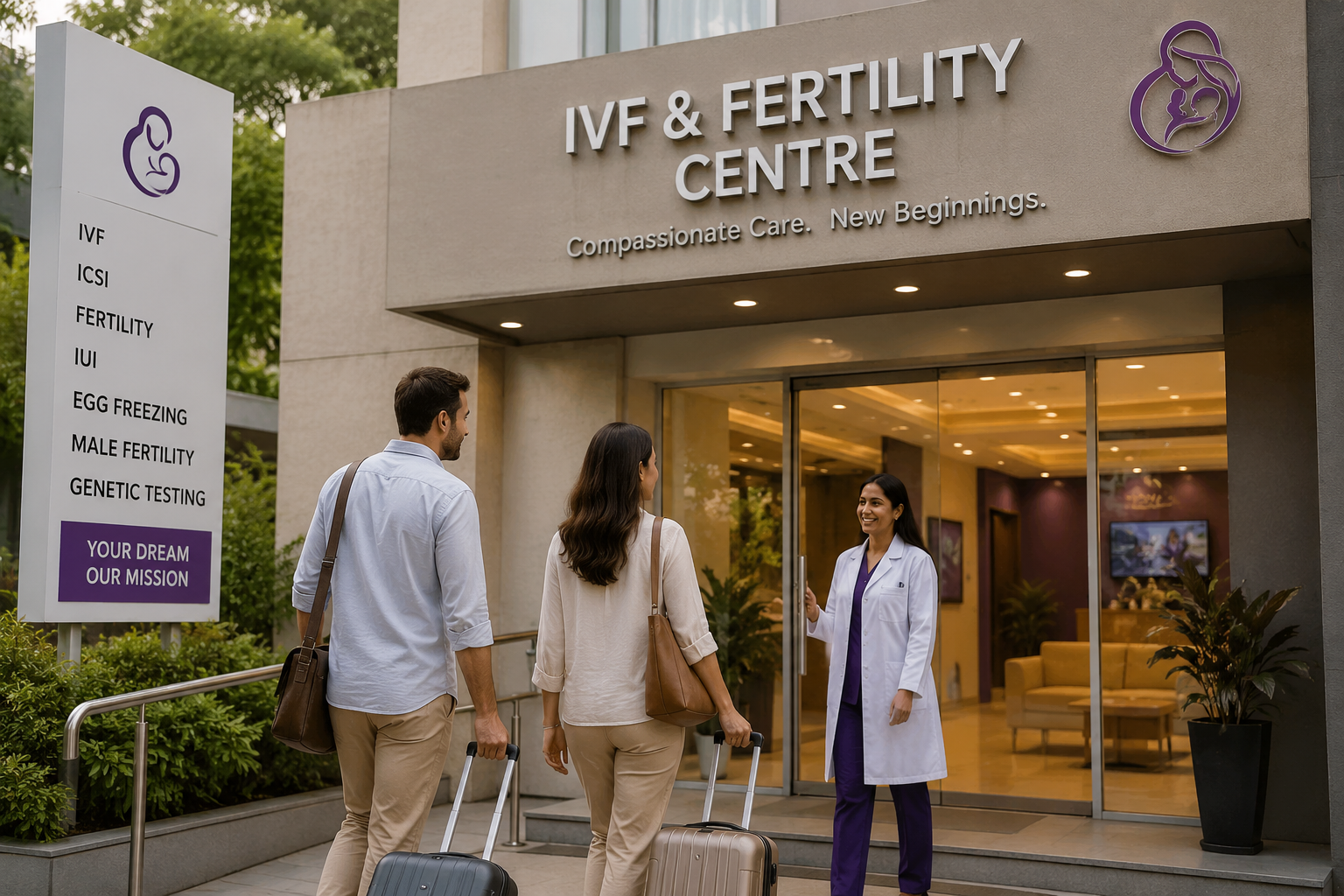
IVF treatment in India for foreigners: Everything You Need To Know Before Travelling
Today, infertility affects millions of people worldwide and shatters the dream of becoming parents. Thankfully, IVF can be a life-changing solution for these couples.
IVF treatment in India for foreigners is becoming quite popular and the most preferred destination because of affordable cost, short waiting time, skilled and experienced fertility specialists, and good hospitals. The laboratories use advanced reproductive technologies, which increase the success rate of IVF treatment in India for foreigners.
What Is IVF Treatment?
IVF treatment in India for foreigners is an advanced fertility treatment that helps couples who face challenges in conceiving naturally.
Normally, an egg and sperm are fertilised inside the female body. If the fertilised egg attaches to the uterus lining and grows for almost 9 months, then a baby is born. This process is known as natural conception. But in some females, there is a blocked fallopian tube, or they have endometriosis, and they struggle to conceive naturally.
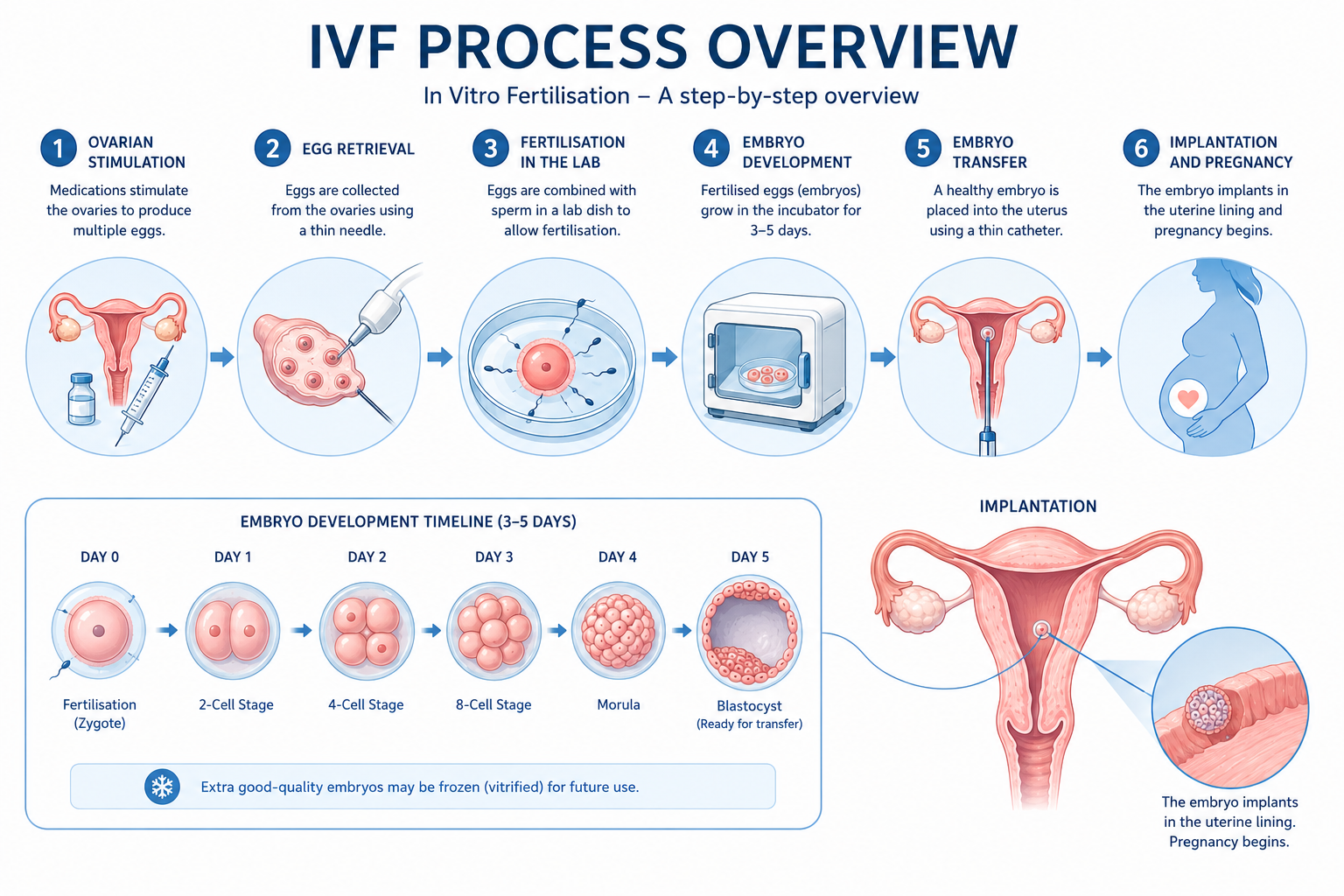
IVF is an assisted reproductive technology where sperm and egg fertilize outside the body, i.e in the lab.
Your doctor will retrieve mature eggs from the ovaries and then combine them with sperm manually in the laboratory. One or two fertilised eggs are then implanted inside the uterus. Pregnancy occurs when the embryo implants inside the uterine wall. One entire IVF cycle will take around 2-3 weeks.
IVF cycle is conducted using the couple's own egg and sperm. But sometimes your doctor will use sperm and egg from a known or unknown donor. Your chances of having a healthy baby through an IVF cycle depend on various factors like age and infertility.
IVF treatment in India for foreigners combines high-quality fertility care with experienced infertility specialists.
Why Does Your Doctor Recommend IVF Treatment?
Risks Associated With IVF Treatment In India For Foreigners
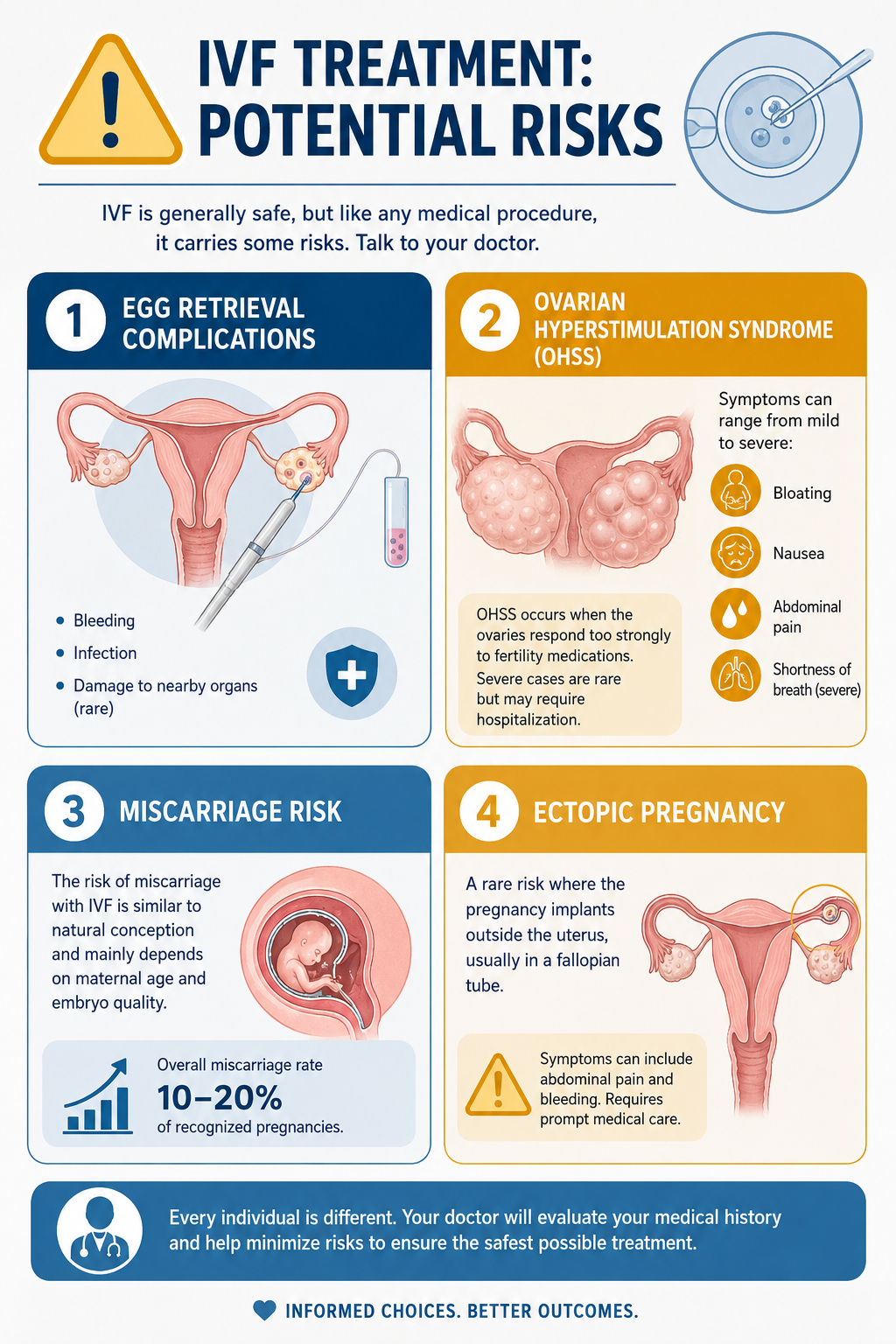
IVF treatment in India for foreigners is associated with certain risks. Some of the risks are listed below.
Below is a step-by-step complete process for IVF treatment in India for foreigners.
1. Complication While Retrieving Eggs
Your healthcare provider will first give certain medications to increase the growth of sacs in the ovaries. Each sac contains an egg. Your healthcare provider will use an ultrasonic image for guiding a long thin needle through your vagina and extract the eggs. This process is known as egg retrieval. But while inserting a needle, it can cause bleeding, infection, or damage to the bladder.
2. Ovarian Hyperstimulation Syndrome
Your healthcare provider recommends fertility medicines like human chorionic gonadotropin to trigger eggs to mature. But it comes with certain risks, like your ovaries can become swollen and painful. You may have vomiting, diarrhea, an upset stomach, and bloating.
Some women can have rapid weight gain and shortness of breath after taking this medication.
3.Miscarriage
The rate of miscarriage is the same in the IVF procedure as that of women who conceive naturally. Women above 40 are at high risk of miscarriage. Many miscarriages also occur because of chromosomal abnormalities and poor embryo quality.
4. Ectopic Pregnancy
It is a condition in which the fertilised egg attaches outside the uterus, i.e mostly in the fallopian tube. The embryo cannot survive outside the uterus, and hence a woman cannot continue the pregnancy.
5. Birth Defects
Many studies show that the risk of congenital disabilities is slightly higher in women conceived through the IVF procedure. Congenital disabilities include digestive issues, heart problems, and many more.
6. Premature Delivery And Low Birth Weight
Research says that the IVF procedure slightly increases the risk of premature delivery and low birth weight.
7. Multiple Pregnancy
There are higher chances of having more than one baby with a multiple pregnancy.
Complete Process For IVF Treatment In India For Foreigners
Here is a complete step-by-step guide for IVF treatment in India for foreigners.
1. Doctor Consultation
You need to consult a good and renowned IVF specialist in India. The doctor will examine your and your partner's medical history, and based upon it, they will suggest the IVF procedure.
Your doctor may recommend certain tests. Some tests are in the list below.
- Ovarian Reserve Testing
The healthcare provider suggests blood tests for the female partner to find out how many eggs are available in the body. Your doctor can even do an ultrasound of the ovary to determine how it will respond to fertility medications.
- Semen Analysis
Semen is the fluid contained in the sperm. A healthcare provider can suggest that the male partner undergo semen analysis. A detailed analysis of semen will help to know the amount of sperm in semen, sperm movement, motility, and shape.
- Infectious Disease Screening
You and your partner may have to undergo certain screening tests to check for certain diseases like HIV.
- Uterine Exam
The healthcare provider will do a uterine exam to check the lining. The test is known as sonohysterography. The doctor will send fluid to the uterus through a thin plastic tube through the cervix to examine the uterus in detail.
2. Stimulation Or Super Ovulation
Your female partner develops only one egg per month. But your healthcare provider will give several medications to produce multiple eggs in one month.
Your doctor can give follicle-stimulating hormones to stimulate the ovaries and produce eggs.
Healthcare providers can use another hormonal injection known as human chorionic gonadotropin to trigger eggs to mature.
3. Egg Retrieval
Healthcare providers will perform a minor surgery called follicular aspiration to remove eggs from the woman's body. This process is done in a clinic or hospital. Your doctor will do this procedure 34-36 hours after taking fertility medications. You will be given medications so that you will not feel pain during the procedure.
The healthcare provider will then insert a needle through the vagina and into the ovaries and follicles to extract eggs using ultrasonic images as a guide. The process helps in extracting the fluid and eggs from the mature follicles. Your doctor repeats the procedure for the second ovary. The doctor collects numerous eggs in almost 20minutes and places them in liquid, which helps them to develop. Healthy eggs are further combined with sperm for fertilisation.
You may have cramps after the procedure. But the pain will go away within one or two days.
In rare cases, your healthcare provider will perform pelvic laparoscopy to extract eggs from the ovary.
Some women do not produce eggs. In such cases, your healthcare provider will use donor eggs for fertilisation.
4. Sperm Retrieval
Semen sample is collected on the same day from the male partner on which eggs are extracted from the woman. Sperm can be collected ahead of time and kept frozen to be used for fertilisation.
Most men usually give a semen sample through masturbation. But if a man cannot ejaculate, then the healthcare provider uses a procedure called testicular aspiration, in which the needle is inserted to extract sperm directly from the testicles. Semen can also be collected from the donor and used for fertilisation.
Your healthcare provider will extract good-quality sperm from the semen to be used for fertilisation.
Your healthcare provider will then mix good-quality sperm with the eggs for fertilisation. This process is known as insemination.
Your healthcare provider then keeps the healthy sperm and mature eggs in an environmentally controlled chamber known as an incubator. In this case, an active sperm fertilises an egg a few hours after being kept in an incubator.
But if your healthcare provider thinks that fertilisation chances are low, then the sperm is injected directly into the mature eggs. This process is known as Intracytoplasmic sperm injection.
6. Embryo Culture
The eggs are now fertilised and are known as embryos. Your healthcare provider will place the embryo in a special incubator. Laboratory staff will check the embryo to ensure it is growing properly. A normal embryo has various cells within almost 5 days.
Few couples are at high risk of passing a genetic disorder to their child. In such cases, your healthcare provider removes single cells or cells from each embryo and performs screening.
7. Embryo Transfer
Your doctor will place the embryos within 5 days after the egg retrieval and fertilisation.
The doctor will do the procedure when the woman is completely awake. A thin and flexible catheter carrying one or two embryos is transferred to the woman's uterus through her cervix. The number of embryo transfers depends on various factors like the woman's age, embryo quality, and many more.
What Happens After The IVF Treatment In India For Foreigners?
Women are usually told to rest on the day after the embryo transfer. However, women do not need to take complete bed rest unless they are at increased risk of OHSS.
Women who have undergone an IVF cycle need to take progesterone pills. This hormone helps the implanted embryo attach to the uterus and make a successful pregnancy.
A woman needs to take progesterone pills for 8-12 weeks even after getting pregnant.
You should contact your healthcare provider immediately if you experience any of the following after the IVF procedure.
- Fever more than 100 degrees Fahrenheit.
- Pelvic Pain
- Heavy bleeding from the vagina
- Blood in urine.
Why Choose IVF Treatment In India For Foreigners?
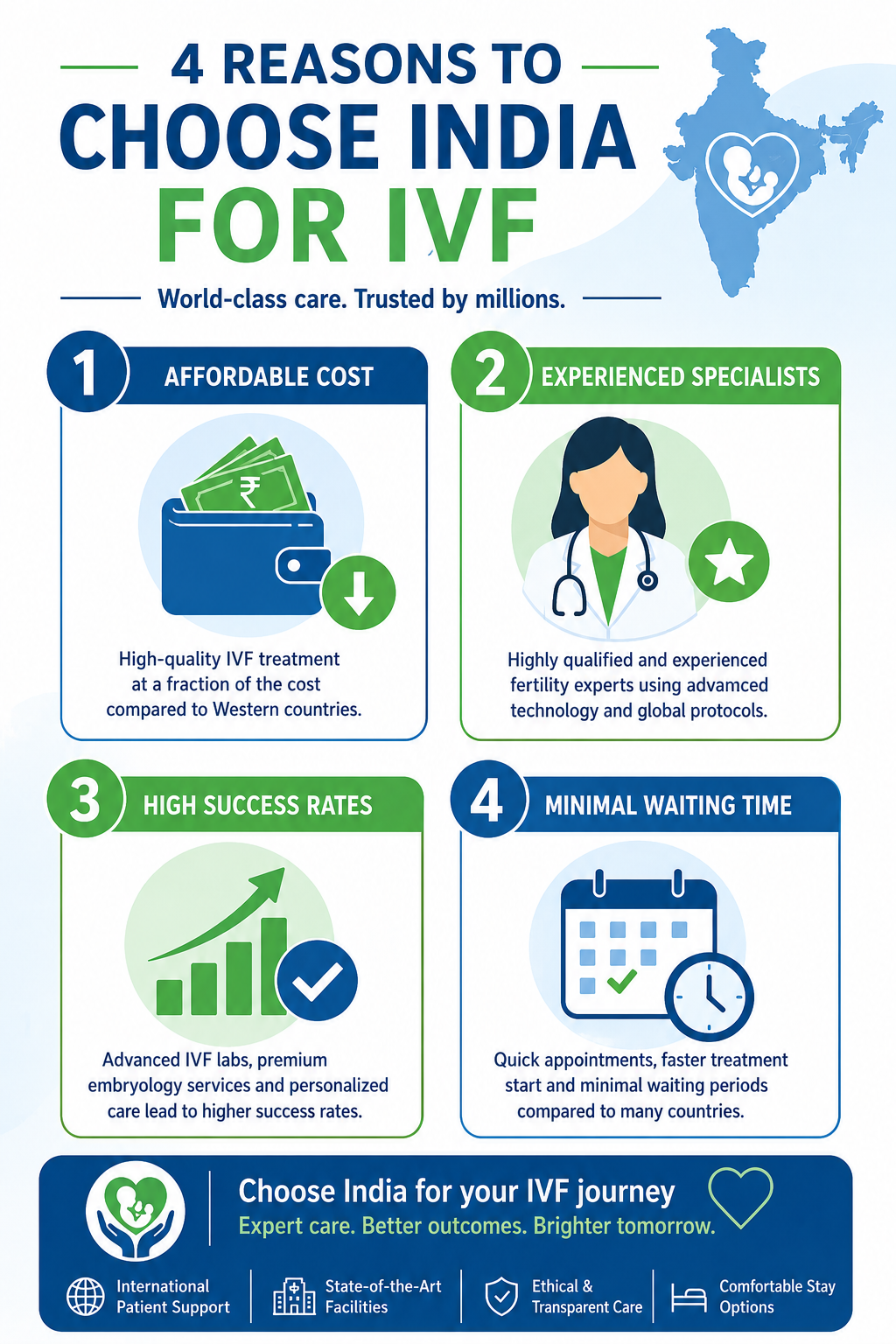
1. Affordable Treatment Costs
One of the biggest advantages for which International patients choose India for IVF treatment is the affordable costs.
IVF procedures are 70 to 80 percent lower compared to developed countries like the UK, the USA, and Australia. The best thing is that you can get advanced fertility treatment and modern laboratories in Indian hospitals at a low cost. The savings become more helpful for a couple who require multiple IVF cycles.
2. Experienced Fertility Specialists
The best IVF clinics in India have experienced fertility specialists. Many IVF specialists have received training from internationally recognised Institutions. They handle complex infertility cases. You can get a personalised treatment plan based on your medical history and health conditions.
3. High IVF Success Rates
IVF success rates are higher in India. The top IVF specialists in India have highly skilled and experienced infertility specialists along with advanced laboratory facilities. These hospitals use modern reproductive technologies during IVF treatment, which increases success rates.
However, the success rates depend on many factors like age, fertility history, embryo quality, and many more.
4. Minimal Waiting Time
Couples with fertility issues usually have to wait for a longer time for treatment in developed countries like the USA, the UK, and Australia. But if we talk about India, then there is minimal waiting time. Patients can start their treatment plan immediately after getting their medical reports. Faster access to a treatment plan is particularly beneficial for women over 40 years old.
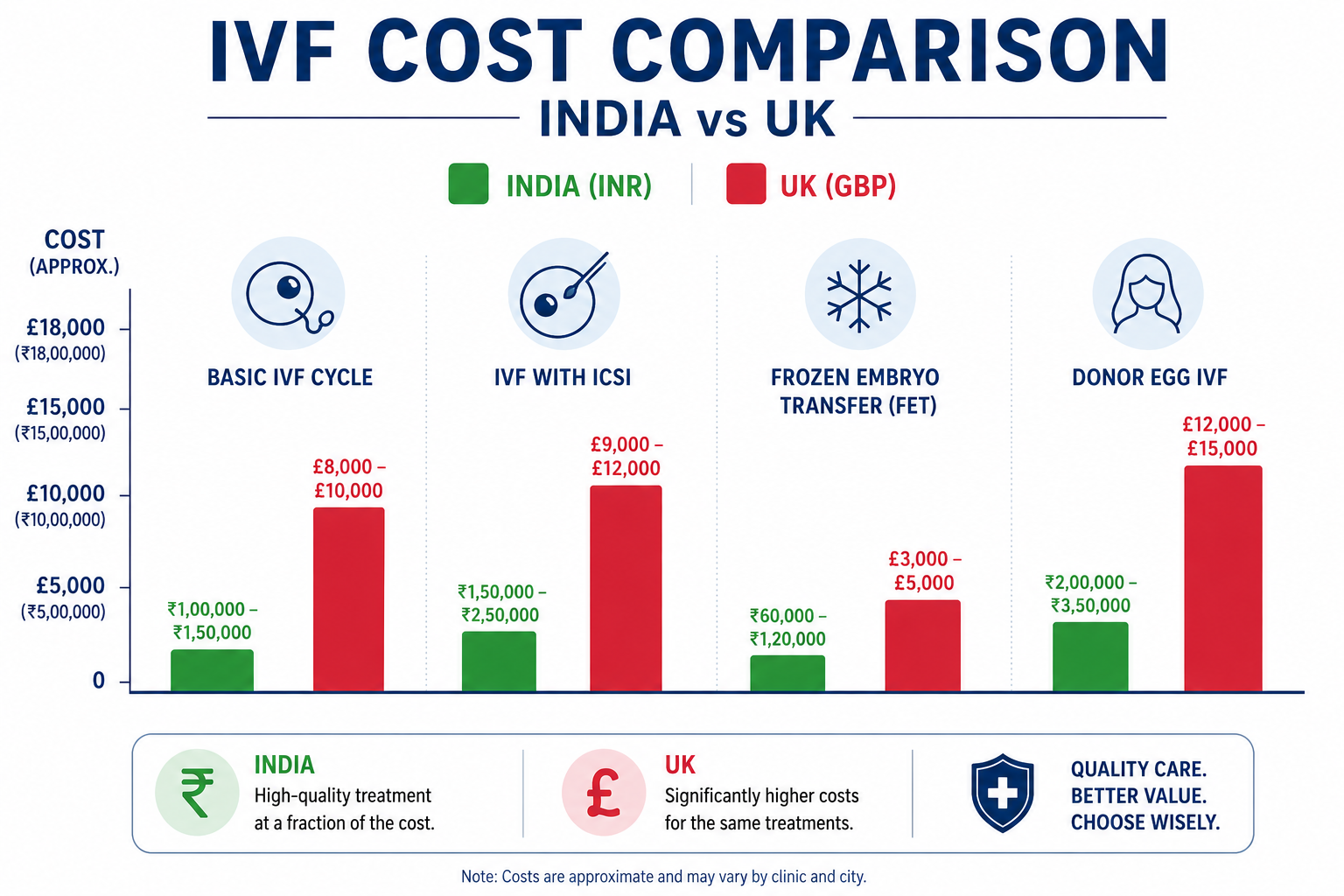
IVF Cost In India VS UK
IVF treatment in India for foreigners is quite affordable compared to the United Kingdom.
Indian fertility clinics offer comprehensive treatment packages, minimal waiting time, and personalised care. Hence, India becomes an attractive destination for many UK patients who are seeking high-quality fertility treatment at low costs.
Here is a tabular representation that compares IVF cost in India vs. the UK.
|
Treatment |
Cost in India |
Cost in UK |
|
Basic IVF cycle |
$2000 to $4000 |
$7000 to $10,000 |
|
IVF with ICSI |
$3000 to $5000 |
$8000 to $12,000 |
|
Frozen embryo transfer |
$800 to $2000 |
$2000 to $4000 |
|
Donor egg with IVF |
$4000 to $8000 |
$10,000 to $15,000 |

Why Should You Connect With Racure Healthcare For IVF Treatment In India For Foreigners?
Racure Healthcare is a popular medical tourism company in India. The Company will arrange a virtual consultation with the best infertility specialists in India for couples who are failing to conceive naturally. You can discuss medical reports and health conditions before arriving at the destination.
We provide flight booking assistance even to the patients.
We appoint a personal care executive for the patient who stays around the clock for assistance during the IVF treatment in India for foreigners.
Frequently Answered Questions
What factors affect IVF success rates?
There are several factors that influence IVF success rates. Some of the factors are as follows.
- Woman age
- Egg and sperm quality
- Embryo quality
- Clinic expertise.
2. Can I return home after embryo transfer?
Yes, you can return home after embryo transfer. However, it depends upon the doctor's recommendation and your overall health condition.
3. What happens if the first IVF cycle is unsuccessful?
If the first IVF cycle is unsuccessful, then the fertility specialist will review the results, discover the reasons for failure, and suggest another IVF cycle or frozen embryo transfer.

Final Words
Today, many international patients choose India for IVF treatment mainly because of excellent medical care, top hospitals, advanced laboratories, and minimal waiting time. A patient can do an IVF cycle at an affordable cost compared to developed countries.
It's best to connect with a reputed medical tourism company in India like Racure Healthcare. We provide a list of reputed hospitals in India from which you can choose the best hospital for IVF treatment. We provide treatment-related services along with travel and logistics services.
🫀 Need Expert Cardiac Care?
Our experienced cardiac surgeons can help you understand your options and plan the best treatment.